
:format()//media/10-webinar-tips-for-student-enrolment-RQ.png)
Do you remember the days when webinars were seen as a backup substitute for in-person events that you couldn't attend because of circumstance?
Well, those days are long gone.
Webinars have evolved to become a pivotal marketing component in a higher education marketer's toolkit and recruitment strategy.
So, if you want prospective students to get the most out of your sessions, keep these tips in mind.
1. Focus on specific topics
Broad "information sessions" are great for overviews for a massive audience. But that's not always enough.
To truly connect with various segments of potential applicants, don't rely solely on general webinars.
Attendees will get bored having to sit through presentations that don't answer specific questions they have. Imagine someone native to your school's city having to sit through 20 minutes of international students' admission information.
In addition to presentations that give attendees tiny bits of various topics, include webinars that cover smaller high-interest topics, such as "How to apply for FAFSA (Free Application for Federal Student Aid)".
Narrowing your topical focus ensures all attendees are there because the subject matter is directly applicable to them.
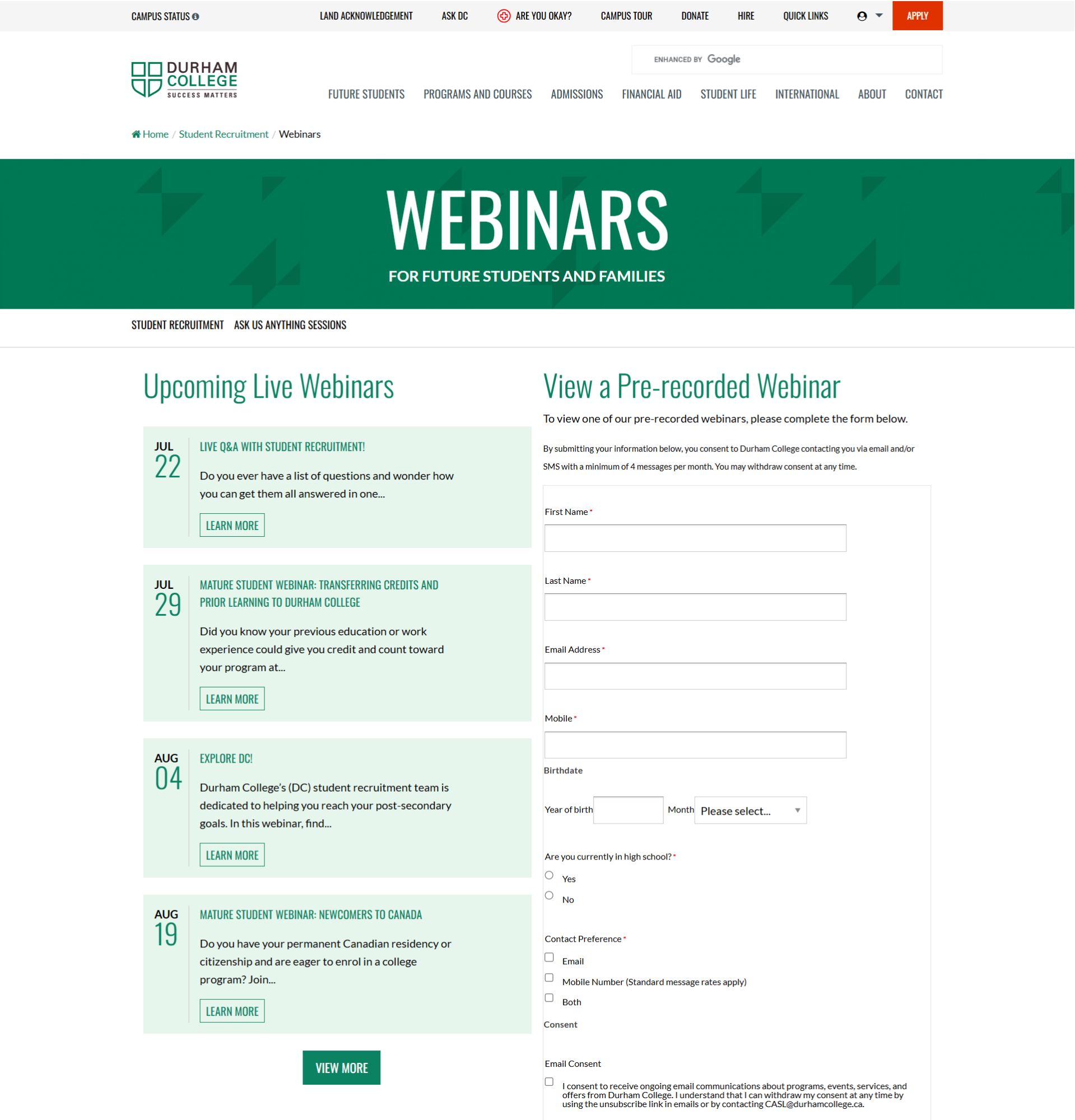
Durham College offers focused live and pre-recorded webinars to ensure information is highly relevant to attendees, including "Live Q&A With Student Recruitment!", "Mature Student Webinar: Transferring Credits and Prior Learning to Durham College", and "Arrive in Canada – Working While Studying Workshop".
2. Reserve beginnings for casual engagement
Remember what's often said about first impressions? The same applies to webinars.
So it's never a good idea to start a session with five minutes of tech troubleshooting or awkward "waiting-for-others-to-arrive" silence. Make sure all your tech's working and start on time.
Break the ice and connect with attendees by using the chat feature to ask questions such as "Where's everyone joining us from?" or "What's your desired major?"
You can even launch an interactive poll while stragglers are filtering into the webinar.
3. Feature student ambassadors
Faculty members and admissions counselors can provide authoritative information. But this is only one step of attendees' webinar experience.
Potential students relate better with peer-based messaging, so include current students and alumni as well. Let them run panels and share personal stories related to their academic experience and campus life.
Peer-to-peer messaging gives prospective students genuine connections with those who are going through what they're going through.
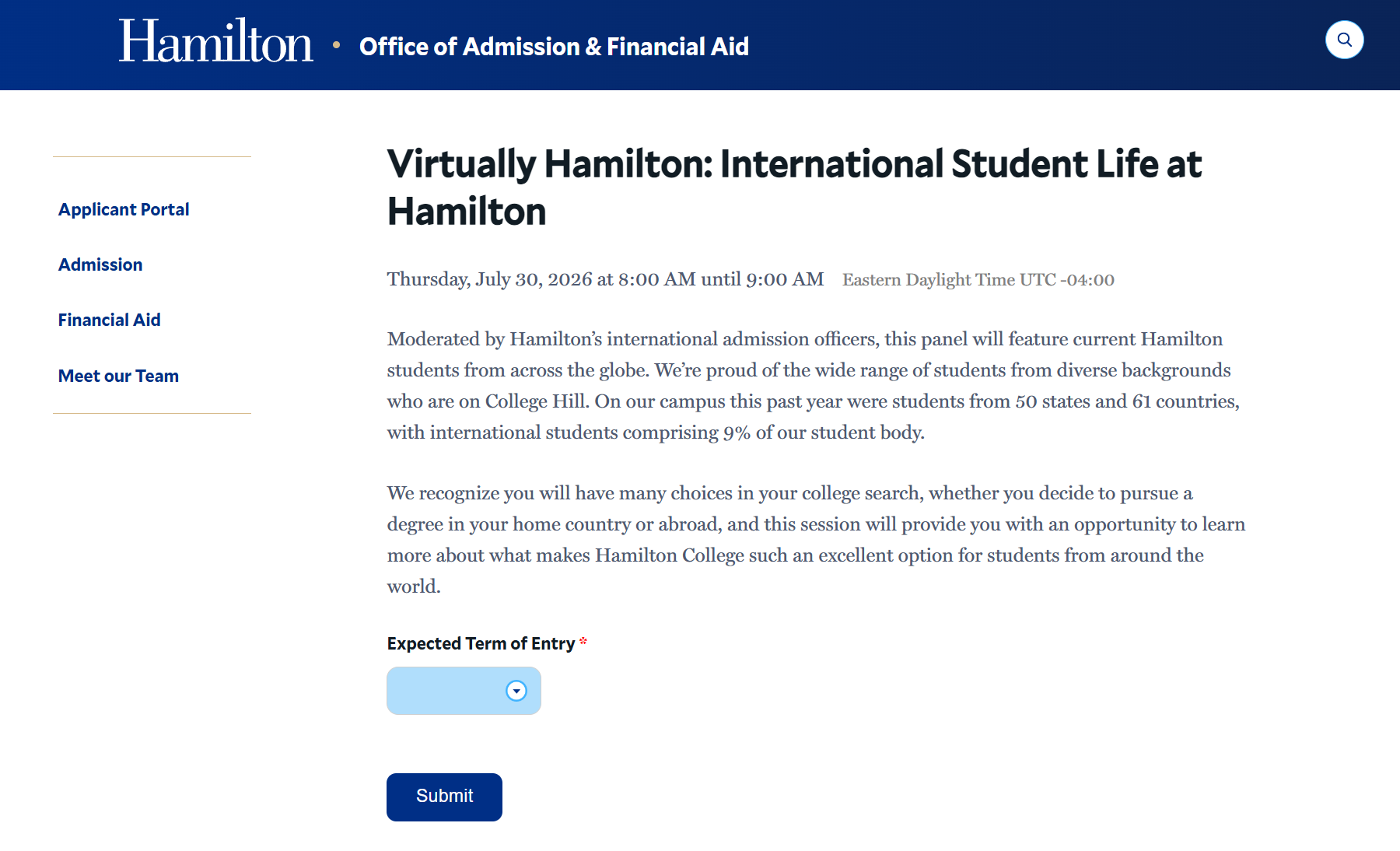
Hamilton College's "Virtually Hamilton: International Student Life at Hamilton" panel features
current students from all over the world discussing and answering questions
about their experiences at the school.
4. Make webinars a conversation
Prospective students value authenticity, engagement, and flexibility over polished, top-down presentations. They prefer to speak with you, not to be spoken to.
So, avoid a strictly "broadcast-style" webinar where they're mostly sitting and listening. Instead, mix your presentation with interactive breakout rooms, Q&As, live polling, and peer-to-peer chat sessions.
When you turn a one-sided lecture into a two-way conversation, you're not simply sharing information, you're building genuine connections that can ultimately drive enrollment.
5. Optimize across time zones and geographies
If you are recruiting internationally or across multiple time zones, offering a single live webinar at 1 p.m. EST will alienate a large pool of potential students.
Identify your strongest target regions and duplicate webinars at optimized local times if possible.
And, for international audiences, explicitly tailor the messaging to address visa processing and cultural integration.
6. Demonstrate return on investment
Don't simply talk about the academic process, show its result.
There's probably tons of information on your website about your school's programs and degrees, so don't take too much time out of your webinar to echo the same messaging. Instead, show what students' future could potentially look like.
Feature successful alumni stories in your webinar and, whenever possible, invite graduates to present their professional successes and Hero's Journey at your school.
These alumni stories help connect academic work with professional success.
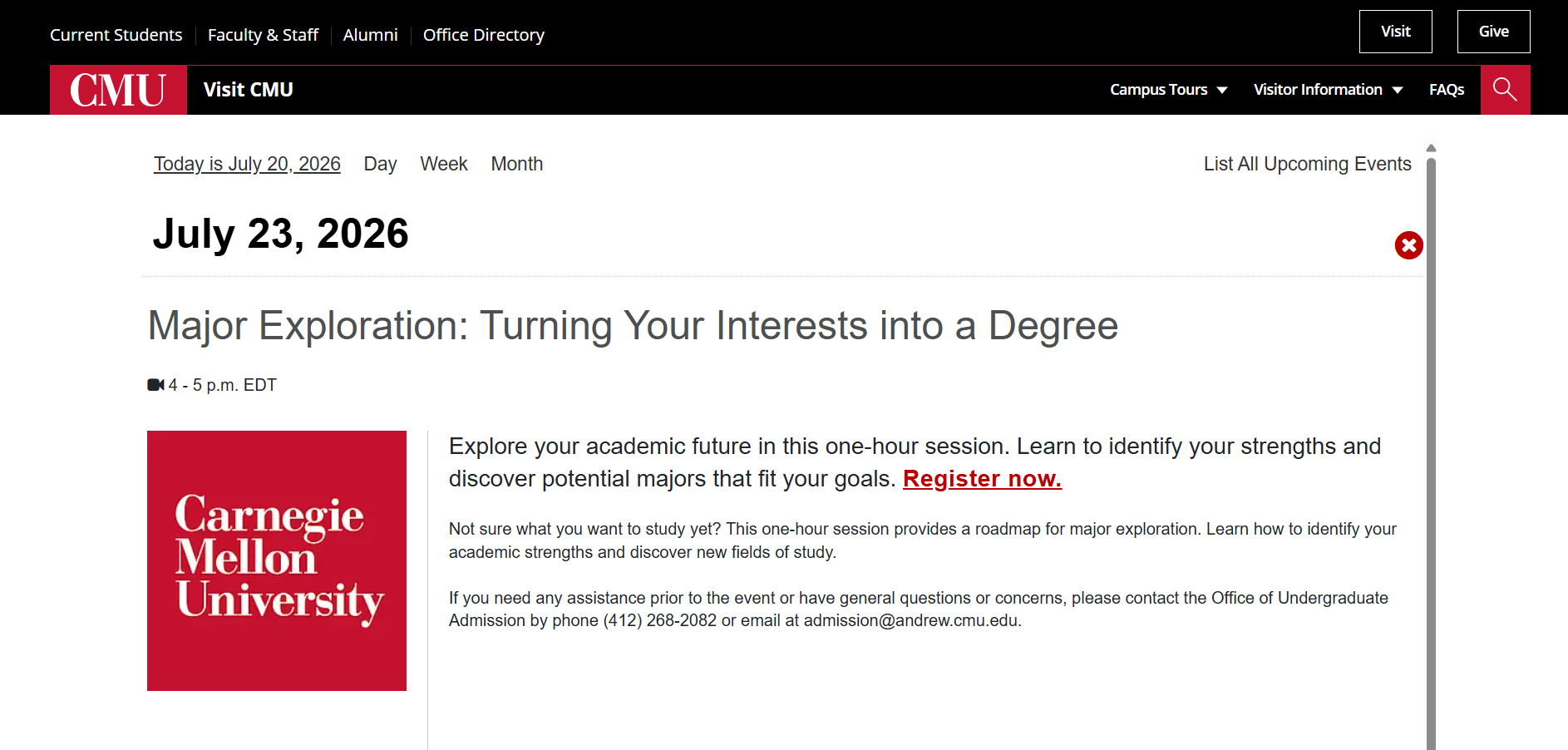
Carnegie Mellon University's webinar "Turning Your Interests into a Degree" lays out a roadmap for prospective students' future—turning interests into a degree and career.
7. Keep accessibility in mind for all attendees
Ensure your webinars are inclusive and accessible to all prospective students:
- Use platforms that support automatic closed captioning
- Provide screen-reader-friendly slide decks in advance
- Make sure speakers thoroughly describe visual elements
- Design a mobile-first experience for those who only have access to the Internet though a smartphone
- Minimize slide text and use a large, easy-to-read font
8. Dedicate time for parents
Parents are crucial stakeholders. For many prospective students, they're the key financial decision-makers.
Speak directly to them by hosting dedicated webinars on safety and mental health, dorm life, and financial aid.
Presenting this information separately allows you to tailor your tone and address parental concerns directly without losing the attention of a younger audience.
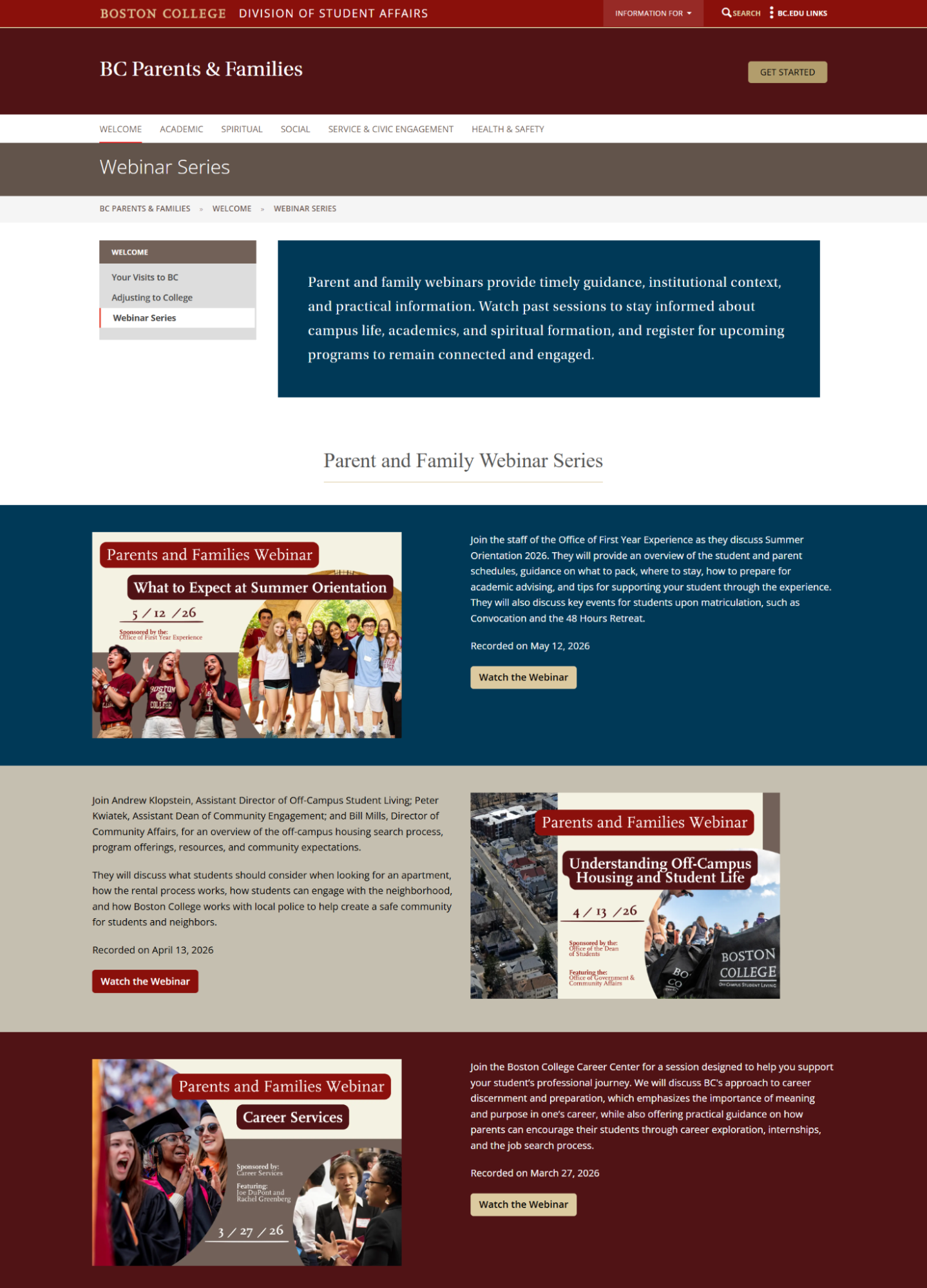
Boston College's Parent and Family Webinar Series provides guidance and practical information on everything related to the BC experience—from roommate selection to post-grad career planning.
9. Include time for polls and Q&A
When designing your webinar, don't schedule the exact time needed for your presentation. You need to also factor in engagement time with prospective students.
Gen Z craves interaction, not static lectures.
Depending on the topic and how interactive you'd like your webinar to be, try to limit your formal slide deck presentation to about 50%-70% of the scheduled time. Dedicate the rest of the time to interactive elements, such as polls, peer-based chats, and Q&As.
10. Follow up with post-webinar communications
Your recruitment efforts shouldn't end when the webinar does.
Send a follow-up email to all attendees with a link to the recorded session and a clear call to action, such as "Apply now" or "Schedule a campus tour".
You can even segment your follow-up outreach based on behavior.
For instance, if an attendee asked a question during the webinar, an admissions counselor could send a personalized email providing a more detailed answer or offer to schedule a video chat.
Or if someone registered for the event but didn't show up, you can send a brief message such as "Sorry you missed the event! Here's a link to the recording."
Turn mouse clicks into student enrollment
Webinars are no longer temporary substitutes for on-site campus visits and information sessions.
With careful planning, webinars can be your school's most powerful recruitment tool for reaching global prospects and building authentic connections.
So, embrace the technology and move beyond the static slides. Turn curious prospective applicants into confident, enrolled students.
How does your college or university use webinar technology to engage with prospective students? Share your stories with us!