
:format()//media/Reaching-future-students-tips-for-higher-ed-marketers-RQ.png)
Your next applicant may be 14 today.
They might already be thinking about subjects they enjoy, careers they could see themselves doing and whether university feels like somewhere they belong. By the time they arrive on your undergraduate course pages, quite a few of those ideas will already have taken shape.
So how do you reach students earlier without treating a 14-year-old like a recruitment lead?
Start earlier, but differently
Higher education outreach has been doing this for years. School visits, subject tasters, summer schools and campus experiences give younger students a chance to see what university is actually like, often well before they need to make an application decision.
The University of Southampton, for example, runs a dedicated pre-16 outreach programme, including Year 10 subject tasters and a residential where students can stay in halls, explore different subjects and experience campus life. citeturn435439search0turn435439search9
At this age, you're helping students answer much earlier questions. What could I study? Where might this subject take me? Could someone like me go to university?
"Under 16" isn't really one audience. What interests a 12-year-old student will be quite different from what a 15-year-old wants to know.
Your content should reflect that.
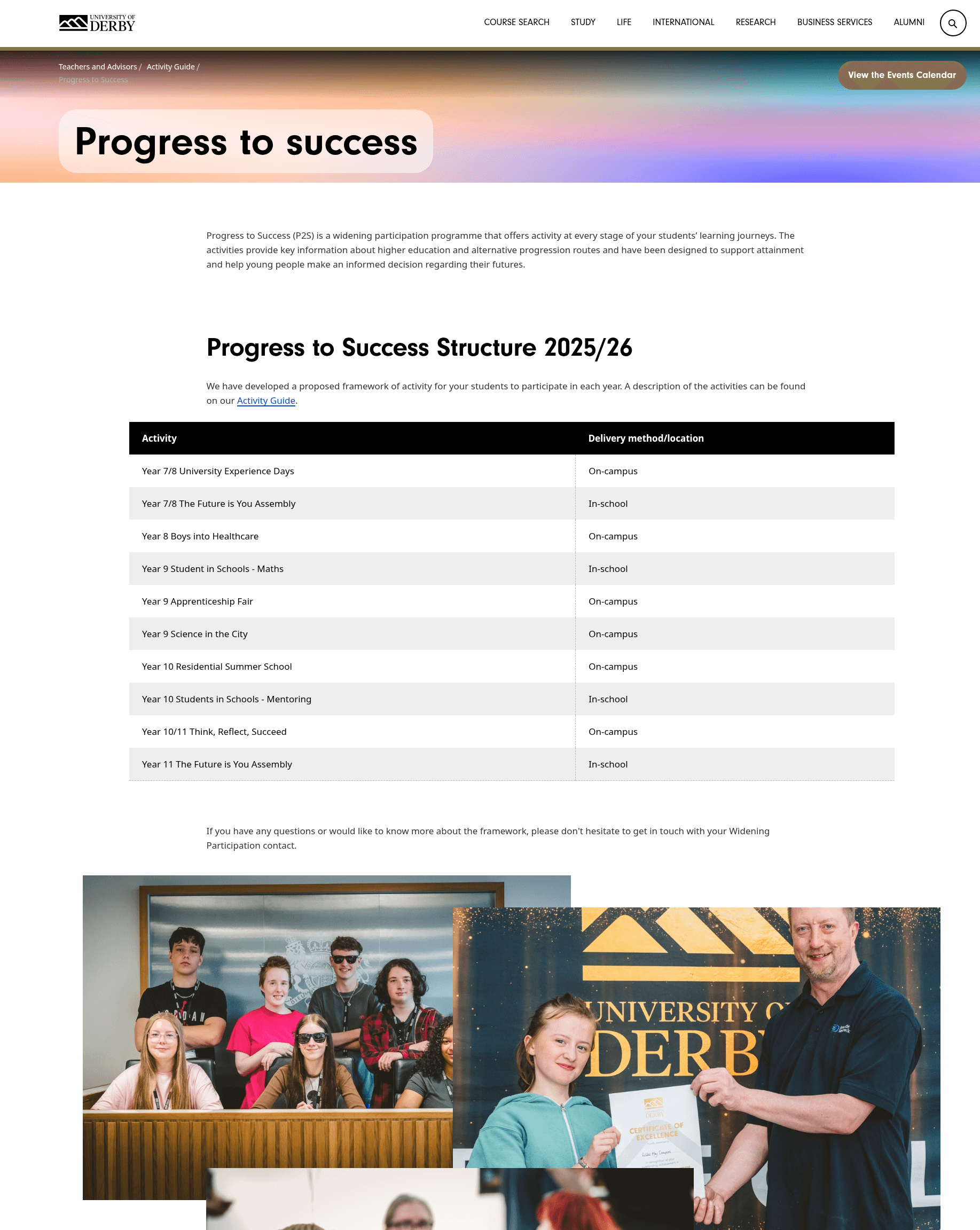
The University of Derby takes a longer view with its Progress to Success programme, working with students from Years 7 to 11. Younger pupils get an introduction to university through experience days, while later activities include subject sessions, mentoring and a Year 10 residential. "
Reach the people around them
For younger students, your audience is bigger than the student themselves.
Parents and carers may be trying to understand subject choices, university costs or what opportunities are available.
Teachers and careers advisers need resources they can use in school. Community groups can introduce higher education to young people who may not encounter it through the usual recruitment channels.
That gives your university or college plenty of ways to be useful without needing to communicate directly with every young person.
You could create a simple parent guide, give teachers ready-made classroom activities, run an online session through a school or invite a youth group onto campus.
And make the content easy to share. A useful guide shouldn't have to sit behind a form. If a teacher wants to print it, a parent wants to send it to someone else or a careers adviser wants to add it to a school portal, let them.
Give them something to experience
There's only so much a webpage can tell a 14-year-old about university.
A day on campus can do a lot more.
Subject tasters, lab sessions, creative workshops and opportunities to meet current students can turn a fairly abstract idea of “university" into something much easier to picture.
You don't need to recreate an open day for Year 9 or Year 10. Give students the chance to try something interesting, see spaces they wouldn't normally see and ask the questions they actually have.
Online experiences can work well too. Webinars such as What is university really like?, How do school subjects connect to degrees? or Careers you may not have heard of can be shared through schools and parents without expecting a young person to follow your social accounts first.
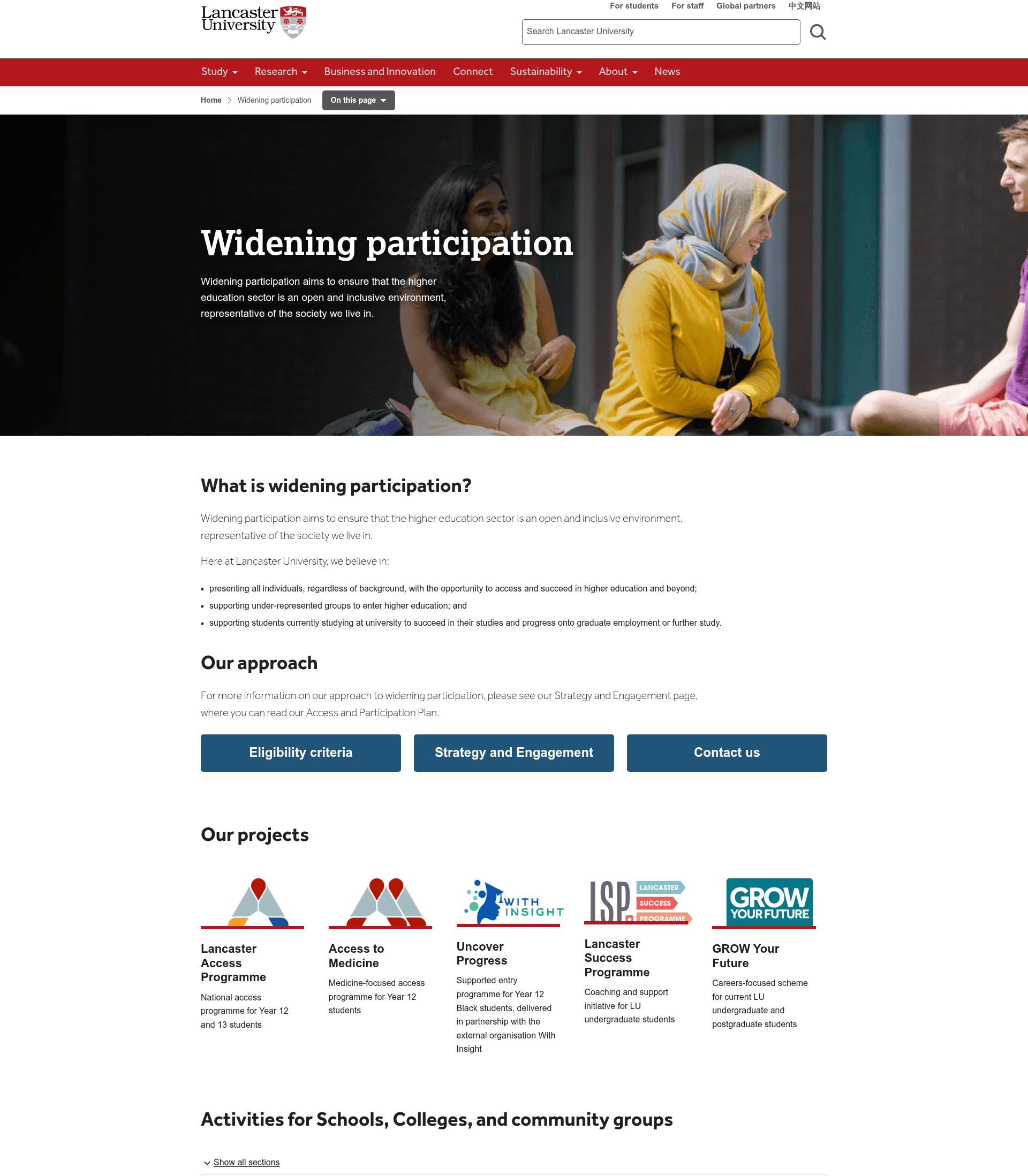
Lancaster University also starts well before application age, with outreach for Years 7–10. That includes student role models at careers events, workshops helping Year 9 students think about subjects and higher education, and campus visits for Year 10. You can give younger students the information that makes sense to them now, then build on it later.
Take another look at your forms
This is also a good time to look at what happens when a younger visitor reaches your website.
Imagine a 14-year-old has found your engineering content and wants to know more. Do they really need to give you their phone number, home address, intended entry year and several other pieces of personal information?
Probably not.
Most exploratory content can be open. Where registration genuinely is needed — perhaps for a campus event — collect what you need to run it safely and involve the parent, guardian or school where appropriate.
The wider digital environment is moving firmly in this direction. The UK ICO's Children's Code says profiling should be switched off by default for children unless there is a compelling reason, while the EU's Digital Services Act prohibits targeted advertising to minors based on profiling.
For your digital team, that makes a privacy-conscious approach useful well beyond compliance. It encourages you to ask whether every field, cookie, automated journey and audience segment is actually helping the young person in front of you.
Think beyond the application
The awkward thing about under-16 outreach is that its value won't necessarily show up neatly in next year's applicant numbers.
And that's fine.
Look instead at which schools come back, whether families are using your resources, which activities students attend and whether your outreach is reaching the communities you hoped it would.
A young person who leaves one of your sessions understanding university a little better — even if they eventually study somewhere else — hasn't been a failed conversion.
They've had a useful interaction with your institution at a point when it could genuinely help.
Your future applicants are already out there, forming opinions about education long before application season begins.
What could your university or college be doing now to help them explore what comes next? Tell us on LinkedIn.