
:format()//media/Why-chatbots-are-a-must-for-universities-RQ.png)
Are you making the most out of your chatbots?
If you’re only using them to answer simple front-line questions, such as office hours, campus locations, or admissions deadlines, you’re missing out on an incredible opportunity to connect with potential students.
Yes, you can still use them as a form of interactive FAQ, but AI-powered chatbots have evolved from giving basic information to actively “conversing” with, and even reaching out to, potential students.
Here are 8 chatbot tips to engage with prospects.
1. Assist with tuition and financial aid
Financial concerns are arguably the most challenging enrollment hurdles to clear.
Although a chatbot can never replace a knowledgeable human financial advisor, it can help students understand basic tuition and financial aid information: Cost of Attendance (COA) breakdowns, Free
Application for Federal Student Aid (FAFSA) instructions, scholarship types and eligibility, and many more fact-and-figures type information..
Prospective students will then be more confident and better equipped with this foundational knowledge when they do meet with a counselor.
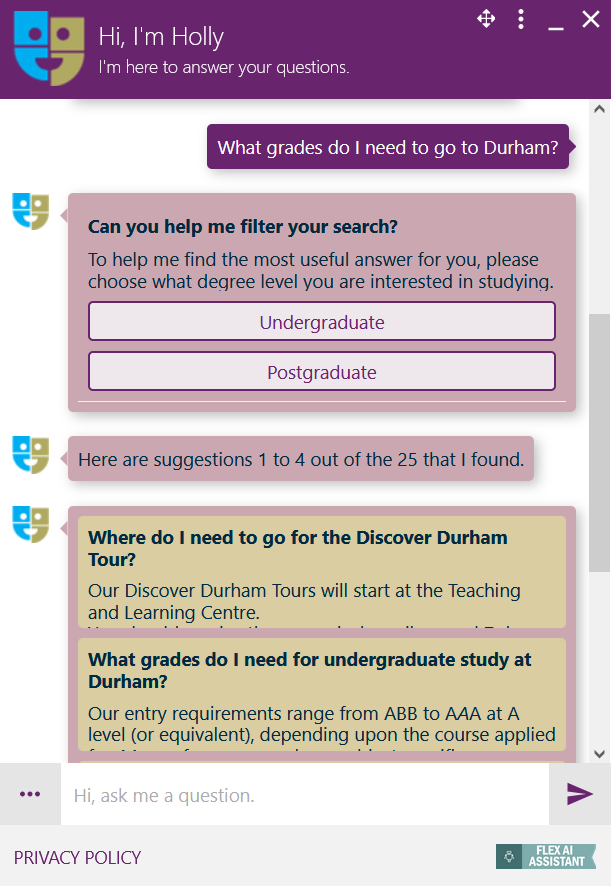
Colorado State University's CamBot lets students ask direct billing questions like "When is my tuition due and how can I pay?" and get an instant answer with links to the payment portal.
2. Bridge gaps in staff availability
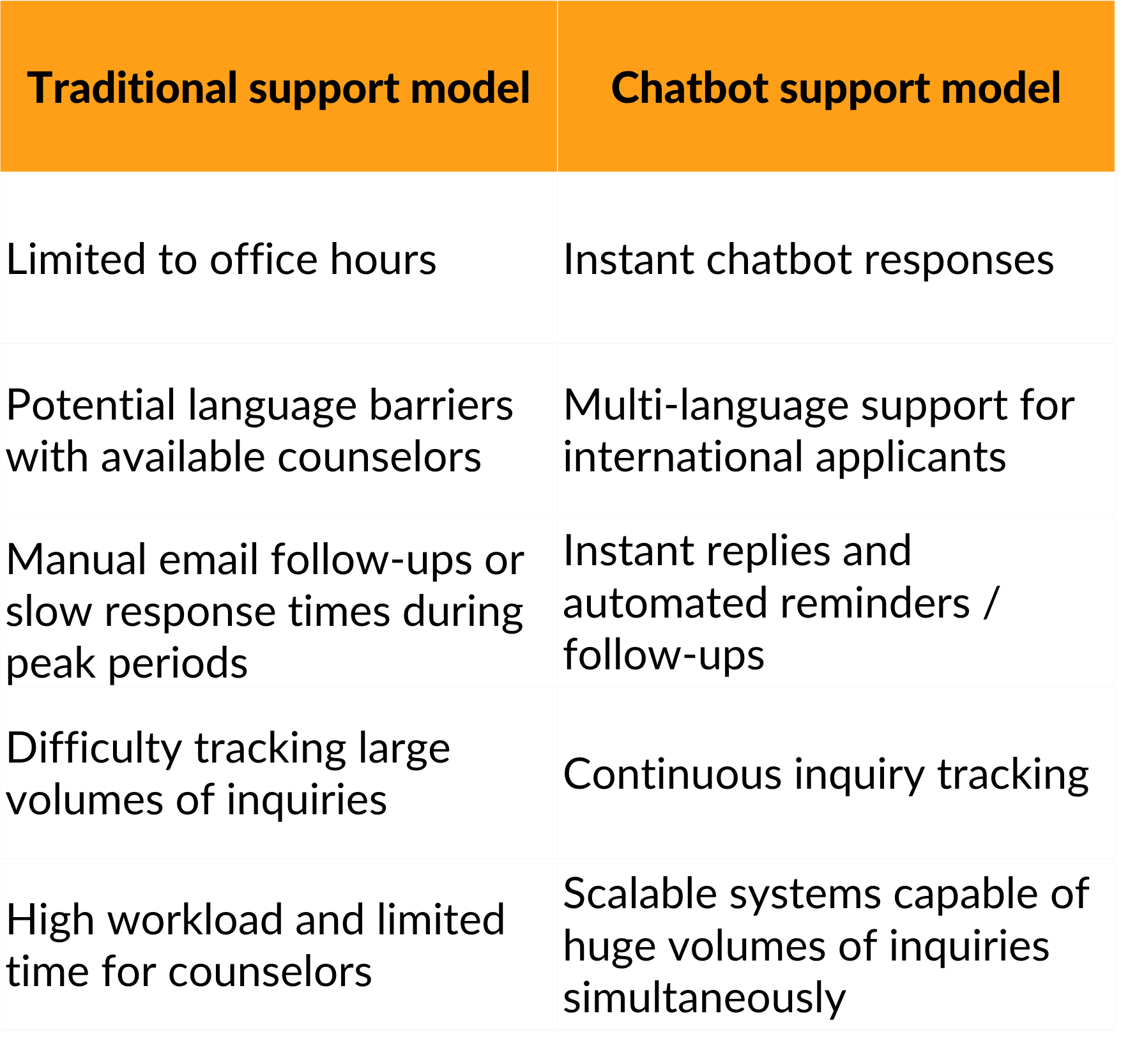
Prospective students expect instant answers; use chatbots to keep up with these demands.
International students in different time zones, adult learners with day jobs returning to school, and working professionals seeking microcredentials will likely research universities and programs outside of your normal office hours.
Rather than make them wait hours or days for an email reply from a staff member, use chatbots to engage with student prospects on their schedule, not yours—significantly reducing email volume and freeing admissions staff.
This ensures you won’t lose high-intent student leads simply because of time zones, office hours, or staff availability.
3. “Nudge” prospects to keep them on track
We often think of chatbots as response tools sitting on your website waiting for prospective students to engage.
But did you know that you can also use chatbots to send reminders to ensure students progress through the admissions and enrollment process?
This is especially useful to combat the “summer melt”, where students accept an admission offer to a college or university (even submitting a deposit) but fail to enroll in the fall.
Chatbots can send automated reminders—through SMS, a messenger app like WhatsApp, or email—for orientation registration, housing deadlines, transcript submissions, or any other messaging to help move the process forward.
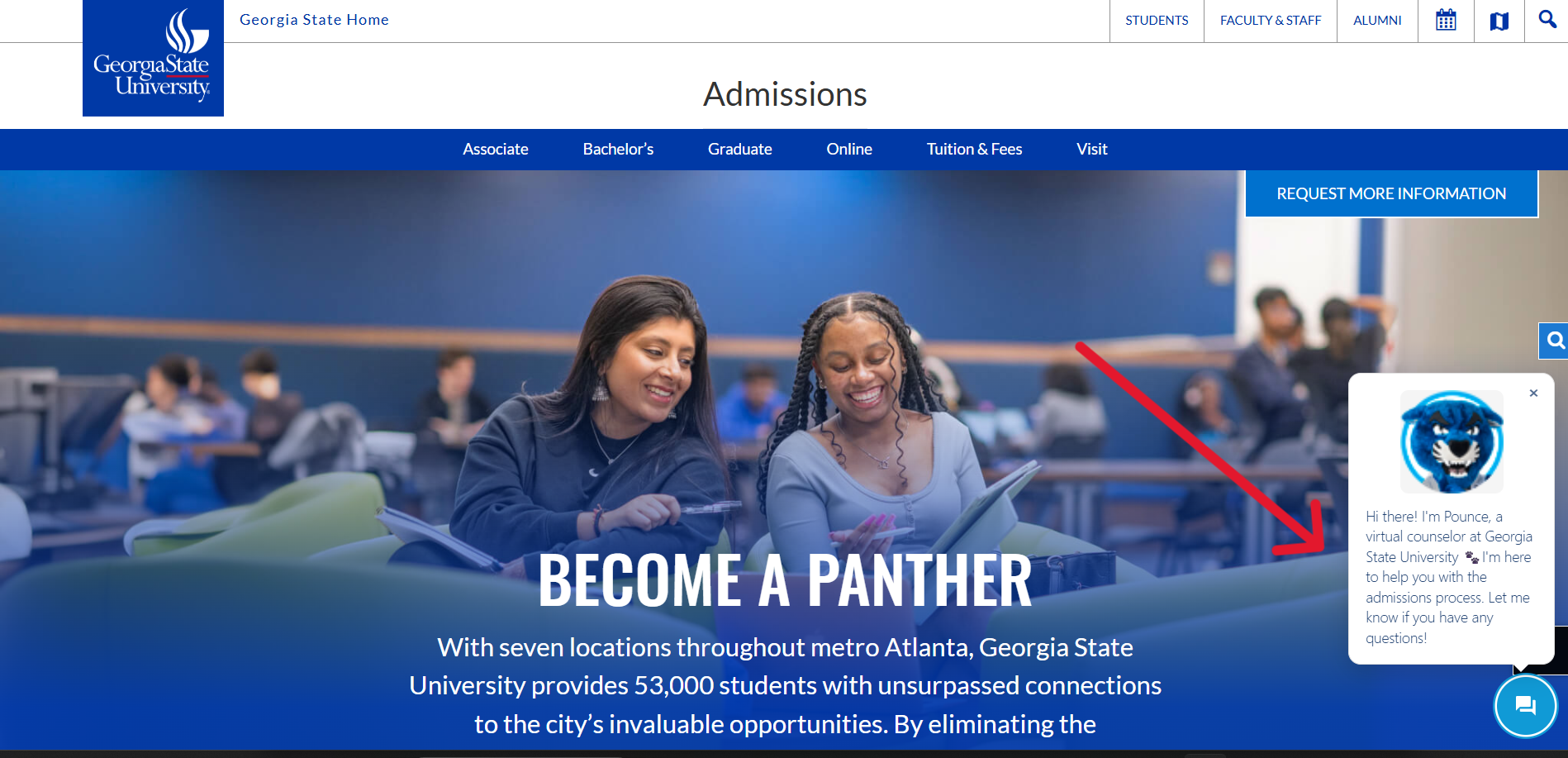
Georgia State University, pioneers of chatbot technology in higher education, set up their “Pounce” chatbot to send customized reminders and application updates to admitted students, famously cutting summer melt by more than 20% and boosted enrollment by more than 3%.
4. Automate student lead qualification
When integrated with a higher education CRM, chatbots can qualify leads in real-time by acting as a 24/7 digital screener.
Instead of having prospective students fill out long, static online forms, a chatbot can turn lead generation into an interactive conversation.
All it takes are a few initial questions and the chatbot will automatically categorize, score, and immediately direct high-priority candidates to a human school admissions counselor.
5. Offer personalized academic strategies
Students might know exactly where they want to go with their future careers, but they might not know how to get there. Chatbots can help them find the best path to their goal.
Instead of forcing students to spend hours searching through a mountain of static course information, use a chatbot to ask them about their personal interests and academic objectives.
The bot can then suggest specific degree programs or elective tracks that align with their professional aspirations. This makes the recruitment process feel more like a tailored path to their desired future and less like a cookie-cutter template.
6. Speak students’ preferred language
It can be challenging, even impossible, to hire a staff that’s able to speak all the different languages of the myriad students applying from all over the world.
To truly engage with a global audience, you can deploy a chatbot that’s able to converse in multiple languages—and even able to demonstrate cultural fluency.
This is especially effective with prospective students’ parents who may be highly influential in the decision-making process but might be more comfortable communicating in their native language.
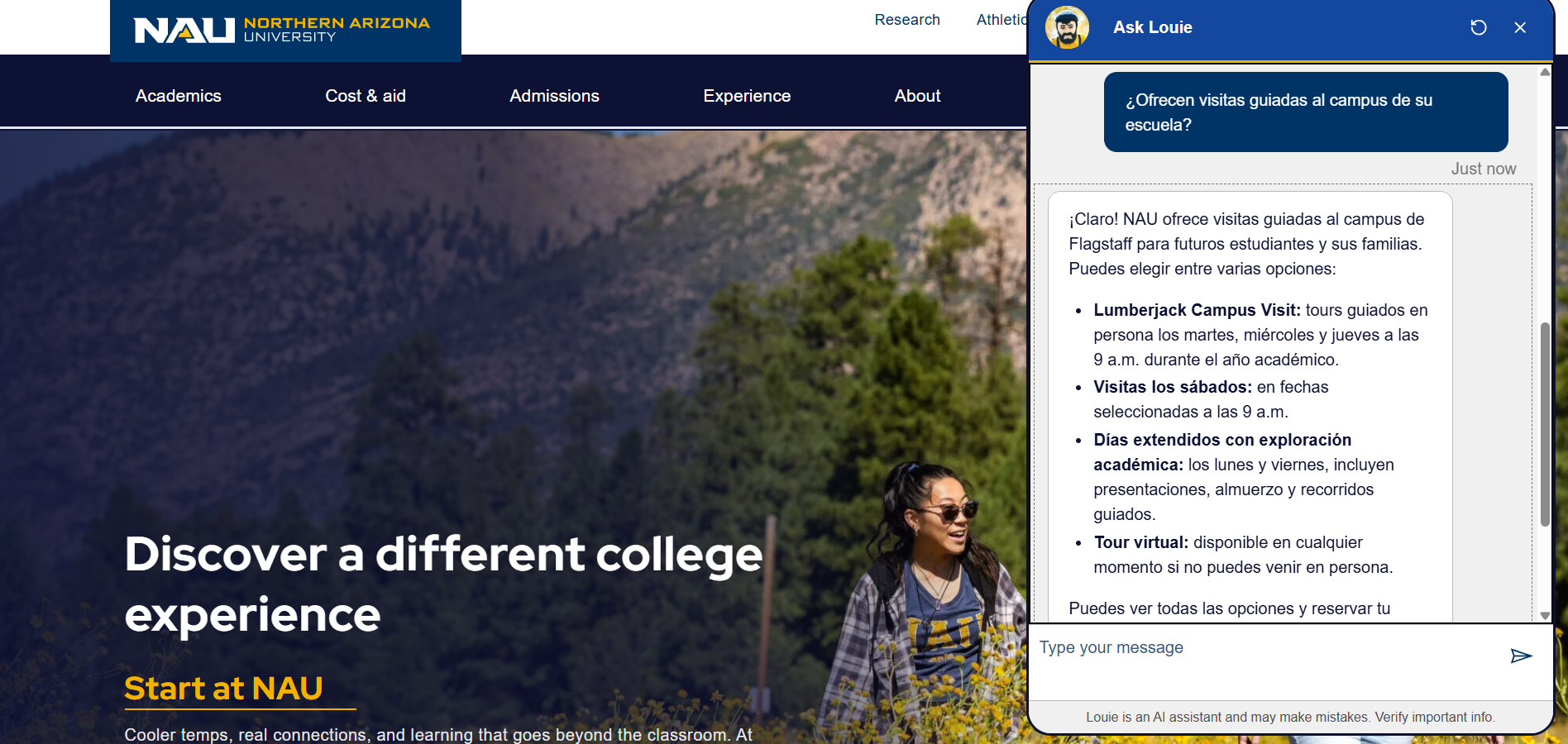
Northern Arizona University’s (NAU) “Louie” chatbot greets potential students in English but its multilingual capabilities allow it to automatically adapt once a question is asked in another language.
7. Proactively offer relevant and related information
Chatbots don’t need to wait idly by for prospective students to ask questions; they can offer related information proactively based on the chat session and their behavior.
For example, if a potential student asks about:
- your university’s environmental sciences programs, the chatbot can ask if they’d like to learn more about specific university sustainability initiatives, achievements, and recognitions.
- university campuses, dorms, and labs, the chatbot can offer to schedule an in-person, online, or virtual campus tour.
- ask about tuition and scholarships, the chatbot can offer to schedule a meeting with a financial advisor or direct them to an online Net Price Calculator.
- extracurricular activities and life outside of academics, the chatbot can list student clubs, intramural sports, local restaurants, and houses of worship.
- student communities and adjusting to a foreign country, the chatbot can link them with active student ambassadors and provide information about peer-to-peer mentorship programs or “buddy systems”.
8. Ensure human advisors are always in the process
Never trap prospective students in a chatbot maze, especially when discussing topics where accuracy and the “human touch” are crucial: financial hardship and fee waivers/installments, complex legal and immigration status, medical or disability accommodations, or any exceptional situations related to a particular student .
Instead, every chat session should include an immediate and seamless exit to a human advisor during office hours or a follow-up request (by phone, messenger, or email) during off hours.
In either situation, the entire chat transcript should be included so that the prospective student won’t have to repeat themselves when speaking with the human advisor.
You can also automate this exit-to-a-human process by offering to direct the prospective student to a counselor under certain conditions, such as:
- If the chat session takes more than X minutes, especially if it seems the prospective student is asking the same questions repeatedly.
- If certain keywords related to legal, medical, immigration, or any sensitive situations are encountered.
- If multiple negative sentiments or frustration markers are detected (e.g., “that’s not what I asked”, “this is frustrating”, or typing in all caps)
- A seamless handoff to a human advisor can make all the difference between continuing the conversation and abandoning both the chat session and your university.
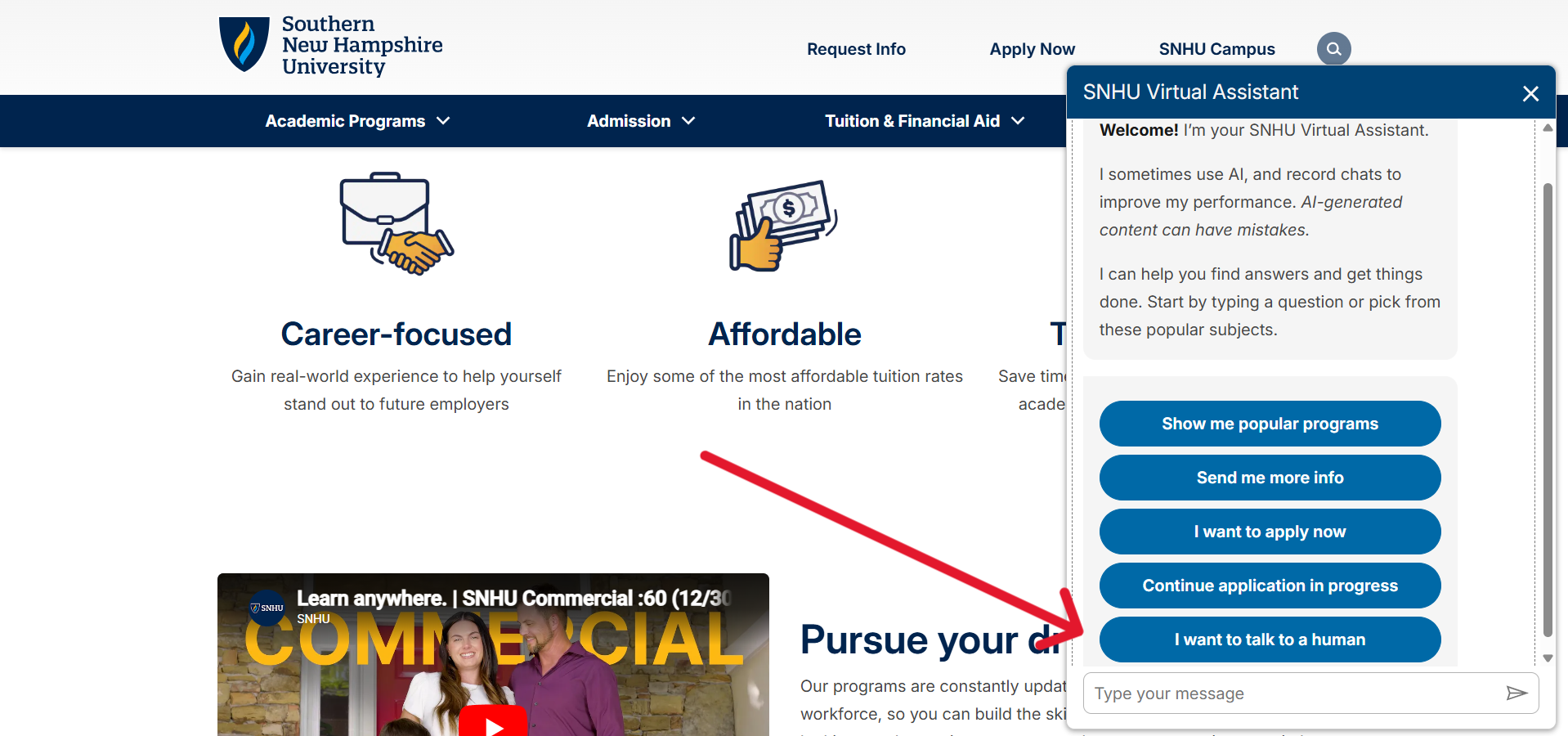
Southern New Hampshire University’s chatbot makes it very clear that it’s a virtual assistant and not a live person, uses AI-generated content, and offers an “I want to talk to a human” option at the beginning of every chat session.
Chatbots are sidekicks, not replacements
The goal isn’t to eliminate human interaction. Far from it!
The goal is to couple technological availability and efficiency with human judgment and nuance. It’s the best of both worlds.
This combination bridges gaps in human availability and time zone differences while automating repetitive tasks—leaving human staff free to build relationships with students and guide them through complex application cases.
Together, technology and human insight don't just accelerate the journey; they enrich the entire student experience...and that’s a win for everyone!
How does your college or university make use of chatbots in your recruitment strategy? Share your stories with us!