
:format()//media/Marketing-sustainability-positive-wins--RQ.png)
Sustainability is no longer just a values-driven initiative, and it’s become more than building your higher ed institution’s brand and perception.
It's a strategic enrolment advantage.
For Gen Z and Gen Alpha, climate and social responsibility aren’t a bonus—they’re the expectation!
They demand action that leads to measurable and verifiable results.
A transparent, hands-on approach that leads to positive outcomes will resonate with students who consider these issues a defining personal and global priority—a power driver of enrolment growth.
Here are five meaningful and impactful ways to market and communicate your school’s sustainability initiatives and accomplishments.
1. Tell your school’s "sustainability story" to strike a chord with students
Instead of listing general and abstract initiatives, develop and communicate compelling, real-world narratives that explain why sustainability is important to your college or university.
Yes, facts and figures do contribute to the credibility of your school’s sustainability efforts. But prospective students connect more with the story and motivations behind the numbers.
Lund University Centre for Sustainability Studies (LUCSUS)—an interdisciplinary research and education center at Sweden’s Lund University—has been conducting sustainability research and education for more than 20 years.
Consistently ranked as one of the world's most sustainable universities—recently garnering first place rating in the Quacquarelli Symonds (QS) Sustainability Rankings 2026 among 2,000 higher ed institutions in about 100 countries—Lund University’s dedication to planet-positive initiatives is as much a part of their academic DNA as their sustainability narrative.
Backed by proven achievements and recognitions, Lund University and LUCSUS weave sustainability success into their recruitment and academic communications, making it a core part of how they engage prospective students.

Lund University’s YouTube video encapsulates the "why” and "how” narrative of its Lund University Centre for Sustainability Studies (LUCSUS), helping prospective students understand the school’s commitment to environmental and social sustainability.
2. Prove your impact with clear sustainability metrics
Your institution’s sustainability story helps you to connect with prospective students on an emotional level; providing quantified results of all your initiatives establishes credibility and reinforces trust.
Unlike a traditional financial return on investment, a school's return on impact (ROI) seeks to substantiate the benefits of the three "P” pillars of sustainability’s Triple Bottom Line: people (social equity), planet (environmental stewardship), profit (economic viability and prosperity).
ROI is all about metrics and specificity. So rather than just stating that you’ve invested in better campus insulation and green lighting, quantify the achievement.
For example: "We reduced campus energy consumption by 15% through a $2M investment in building insulation and smart lighting. This resulted in an estimated $500,000 annual cost savings and a 1,500 metric ton decrease in C02 emissions."
The University of British Columbia (UBC) presents students and stakeholders with extensive resources related to their planet-positive initiatives, achievements, and ROI results: a sustainability microsite, a sustainability dashboard with performance metrics, and a downloadable PDF of their Annual Sustainability Report.
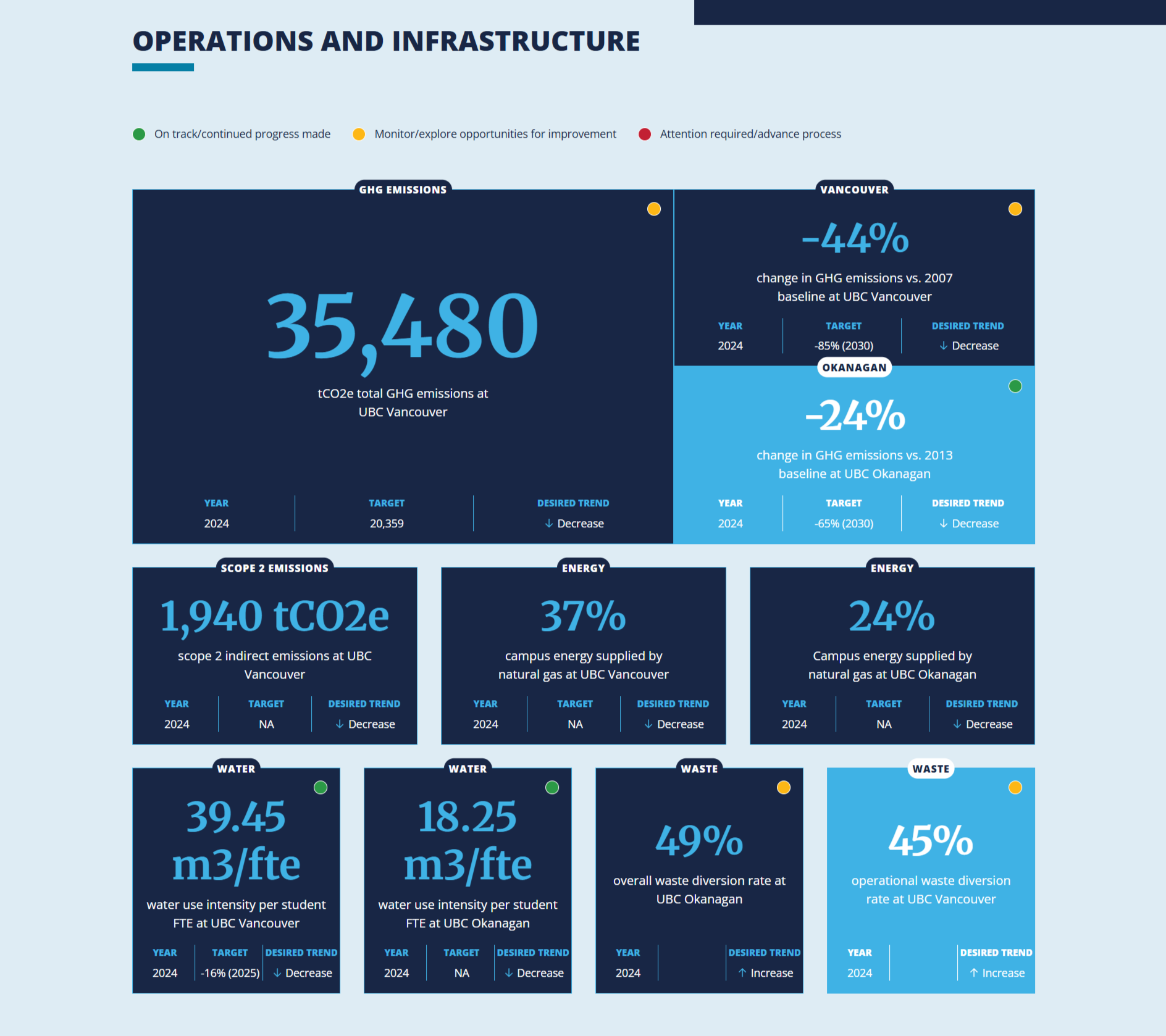
UBC’s Sustainability Dashboard lets students review live ROI metrics on sustainability performance across the school’s academic, operational, and community initiatives—from greenhouse gas emissions, water, and waste to housing, childcare, and transportation.
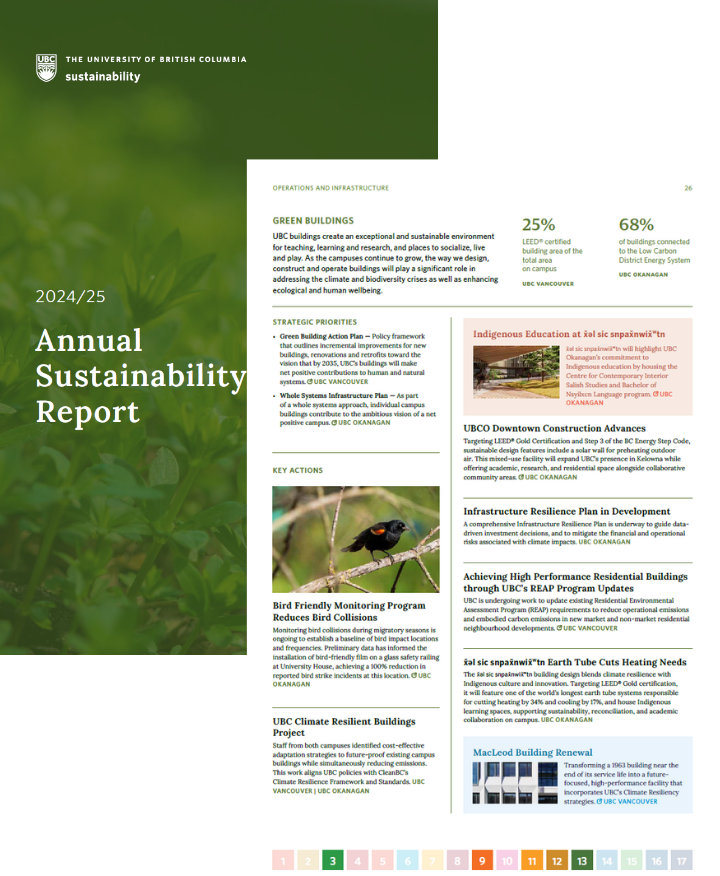
UBC’s downloadable 2024/25 Annual Sustainability Report PDF contains detailed information on the school’s sustainability accomplishments, achievements, results, and goals.
3. Boost trust with third-party recognition
Prospective students are increasingly skeptical of vague sustainability claims—they want evidence, not empty promises.
But objective reviews and recognition from reputable, independent third-party organizations provide verifiable proof that your initiatives meet established, rigorous, and up-to-date sustainability standards… marketing gold!
Use them in blog posts, social media, and even your email signatures to build trust and reinforce your institution’s leadership in sustainability.
University of California, Berkeley (UC Berkeley) recently earned a Platinum rating in the latest version of AASHE’s STARS 3.0 ranking—the first university in the world to do so.
The Association for the Advancement of Sustainability in Higher Education’s (AASHE) Sustainability Tracking, Assessment & Rating System (STARS 3.0) is a globally recognized framework used by colleges and universities to measure, report, and improve their sustainability performance.
Platinum is the highest rating possible, signifying exceptional leadership and innovation in campus sustainability. And this achievement is mentioned by UC Berkeley across their communications, articles, and marketing.
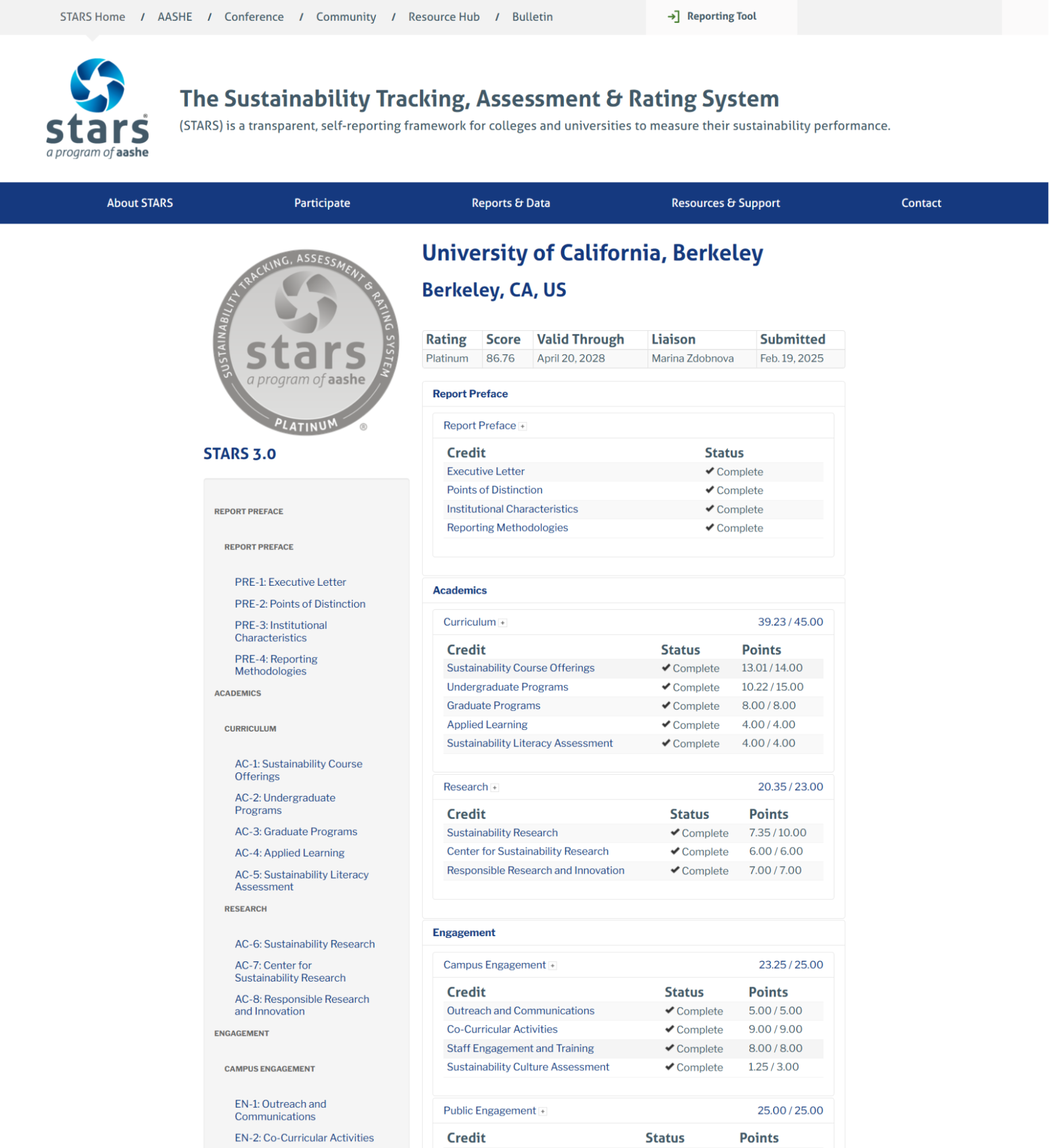
UC Berkeley’s Platinum rating in AASHE STARS 3.0, a globally recognized and respected framework, provides students with sustainability metrics from a reputable and independent organization.
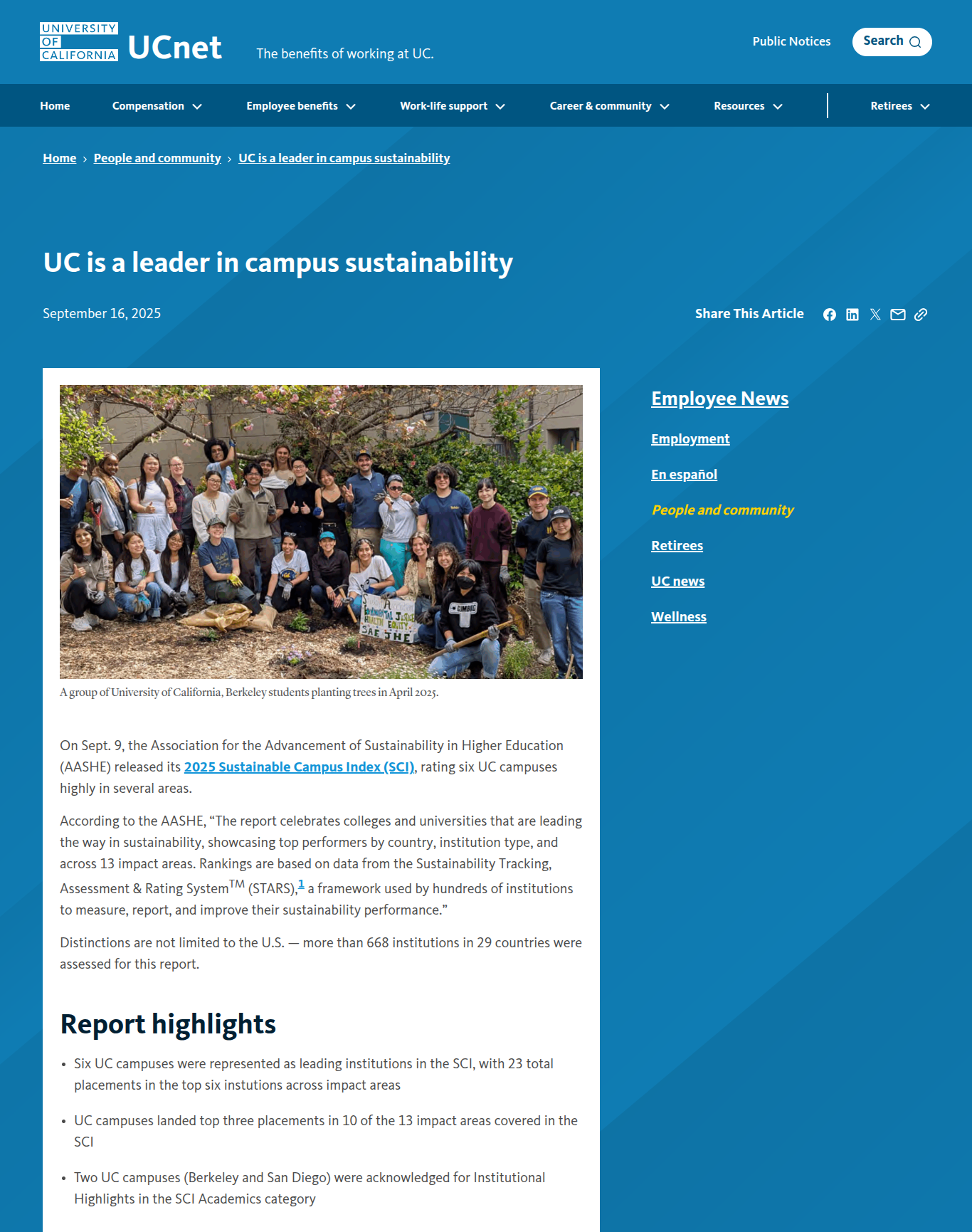
University of California communicates and showcases their AASHE STARS achievements among various UC campuses, including Berkeley, Irvine, Merced, Riverside, San Diego, and Santa Cruz.
4. Leverage students as sustainability ambassadors
Peer-to-peer communication is often more relatable and persuasive to prospective students than an institution's high-level sustainability vision, which can sometimes seem very abstract and grandiose.
Student sustainability ambassadors will serve as an authentic and influential voice for promoting a school’s planet-positive initiatives.
Whether in a video, as live tour guides, or volunteering in admissions, student sustainability ambassadors help connect a school’s planet-positive goals with students’ daily campus life.
In University of Connecticut’s Sustainability at UConn video, Maura Sanchi, who’s working towards a bachelor's in environmental science, discusses her motivation behind choosing this specific University.
In her search for a school that aligns with her desire to live a sustainable life, she describes how she connected with UConn’s commitment to limiting their impact on the environment. She’s even experiencing everything she learns firsthand by living on a working, student-run farm.
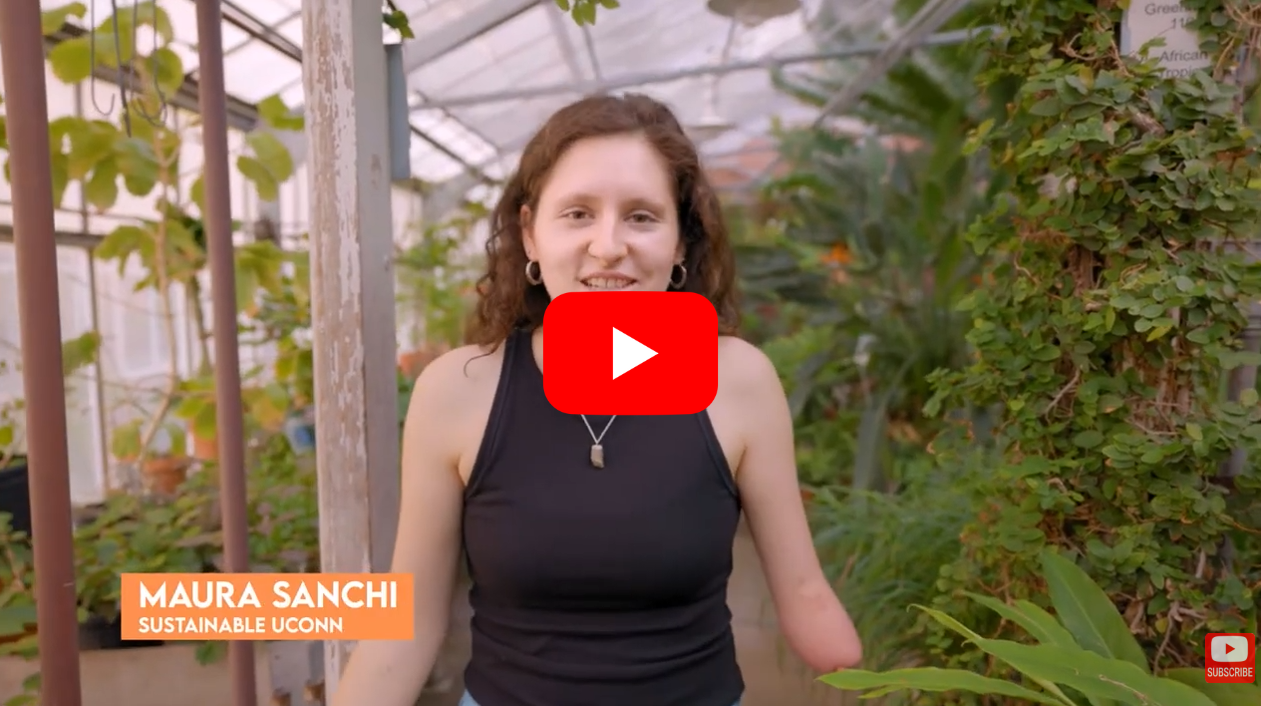
University of Connecticut’s Sustainability at UConn video features one of their environmental science students, describing what attracted her to UConn and explaining many of the school’s sustainability initiatives and achievements.
5. Showcase sustainability through campus tours
Virtual and live campus sustainability tours are a powerful recruitment tool, transforming abstract ideas into tangible, real-world proof of your school’s planet-positive commitment:
- Renewable energy generation: Show solar panel arrays or wind turbines, detailing how much power they generate and the resulting reduction in your school’s carbon footprint.
- Green building certifications: Mention green campus certification, such as Leadership in Energy and Environmental Design (LEED) or Building Research Establishment Environmental Assessment Method (BREEAM).
- Smart lighting systems: Demonstrate LED lighting, automated motion sensors, or daylight harvesting controls that significantly reduce electricity consumption.
- Water conservation: Highlight water-saving fixtures, such as low-flow toilets and faucets, or rainwater harvesting systems used for irrigation or non-potable uses.
- Recycling and composting programs: Display your school's three-bin waste stations—landfill, recycling, composting—and explain how much waste is diverted from landfills.
- Sustainable transportation: Point out electric vehicle (EV) charging stations and dedicated bicycle storage areas, including any incentives for students and staff who use sustainable commuting methods.
- Community gardens or farms: Tour spaces dedicated to growing food and emphasize how they provide educational and sustainability opportunities for students.
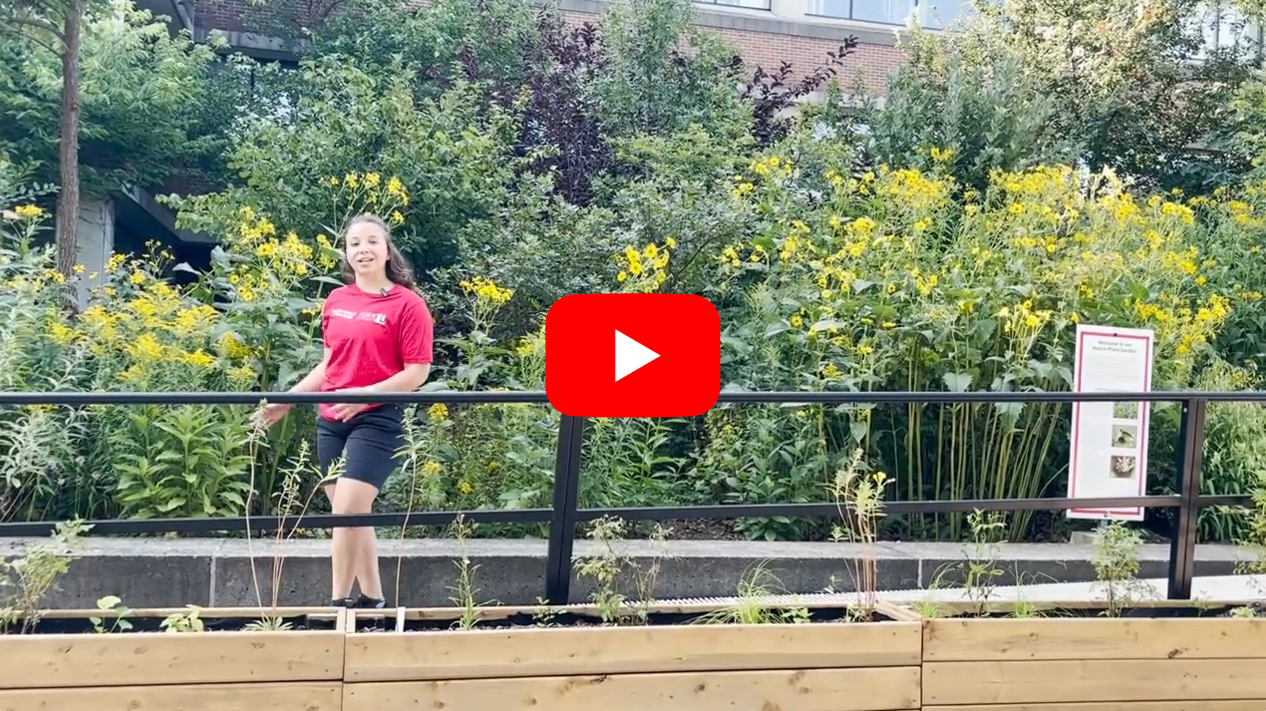
YorkU’s Sustainable Campus Tour video is a valuable recruitment asset, highlighting the school’s various sustainability initiatives: native plant gardens, LEED-certified buildings, stormwater management projects, vehicle charging stations, and convenient public transportation.
Sustainability and enrollment: Invest in a bright future
Higher education institutions that succeed in attracting the best talent will be those that align their mission with global priorities.
Ready to transform your sustainability wins into student engagement?
Start by looking at your campus through the eyes of a values-driven student. Then make sure your website, social channels, and tour guides tell the full story. It’s a powerful differentiator that speaks directly to a growing segment of prospective students who view social and environmental responsibility as a valuable part of their worldview.
By clearly and transparently communicating your sustainability efforts, you’re reinforcing the image of a forward-thinking and ethically responsible school that’s dedicated to leading real-world change.
What are you doing to communicate your school’s sustainability initiatives and achievements? How are students responding to your efforts? Share your stories with us!