
:format()//media/Clearing-2026-higher-education-marketing-campaigns-RQ.png)
In our first Clearing 2026 roundup, we looked at what university digital teams did before Results Day: the campaigns, social content and digital tools designed to get students ready before the rush began.
Then Results Day arrived, and the job changed almost immediately.
The clever campaign concepts have given way to phone numbers, live chat, WhatsApp and very obvious next steps.
And now it’s shifted again!
Clearing hasn't stopped... But for many students, the question has gone beyond, “Can I get a place?” to “Is this university actually the right place for me?”
And that changes the job for university digital teams too. Let's see how some of them are managing this.
From getting the offer to feeling good about it
Students who applied months ago would have had time to attend an Open Day, research their accommodation, and imagine themselves at your university.
It's different during Clearing: they have to make the same decision in a matter of just days.
So, once the initial Results Day rush is over, universities need to quickly move from helping students get an offer to helping them feel confident about accepting one.
That's where it gets tougher. You have to put all the information you have months to place before the eyes of prospective students during the year into clear messaging for students who need to make near-instant decisions.
1. Lancaster University
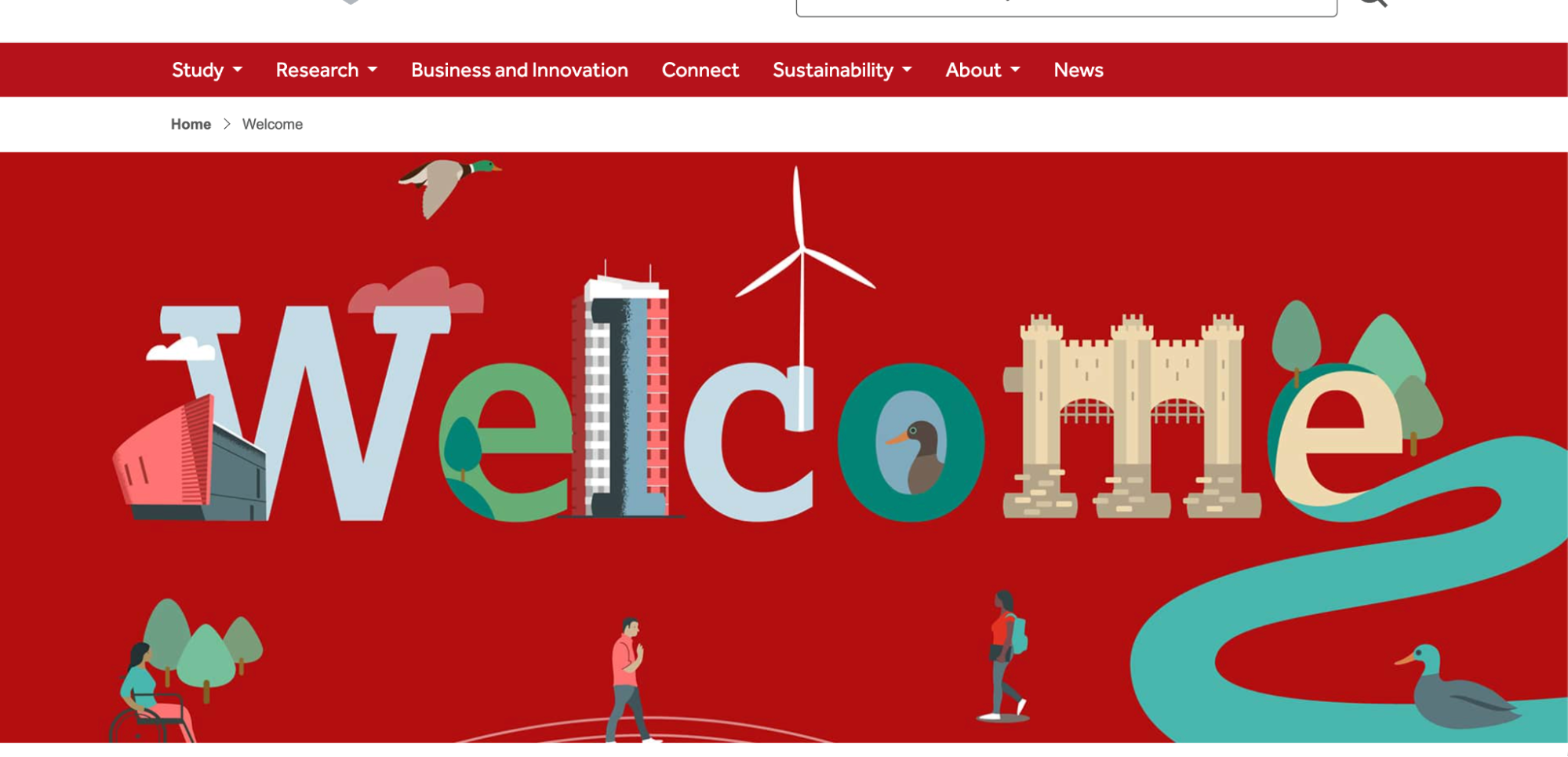
Lancaster University added dedicated Clearing campus tours throughout the week after Results Day, from 18 to 23 August, as well as an online Clearing event.
Its wider Clearing offer and support includes guaranteed first-year on-campus accommodation, while its hotline continues during the working week for as long as vacancies remain.
It's a good example of the journey continuing after the application.
They’ve followed through from whether Lancaster has a place available for a student to wether that student can now picture themselves living and studying there.
2 . University of Manchester
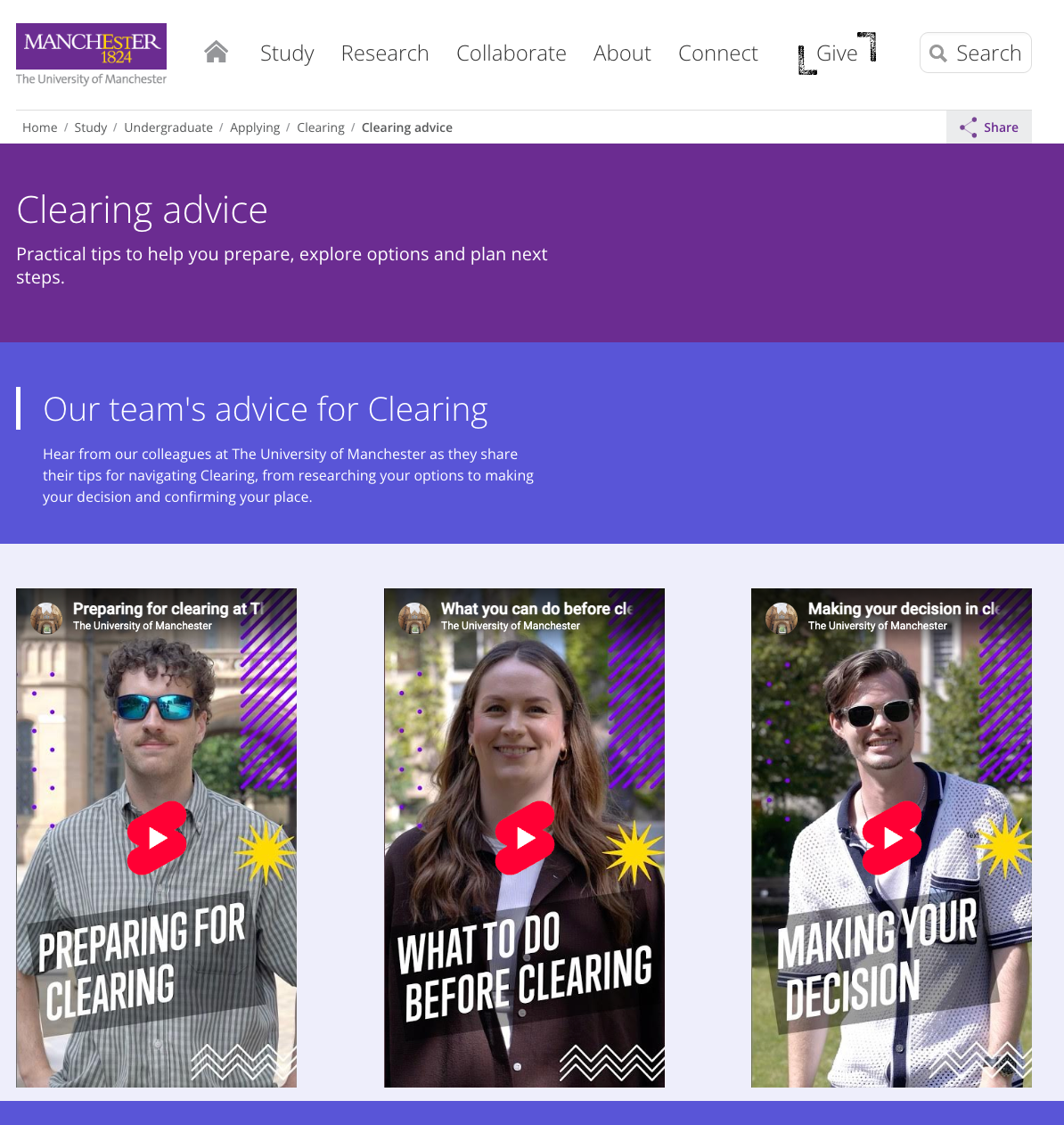
The University of Manchester took a slightly different approach.
Rather than running a full Clearing Open Day, it scheduled a campus tour specifically for Clearing applicants on 19 August.
Students could then contact their School or Department separately if they wanted subject-specific information.
Clearing applicants who accepted their offer and applied for accommodation by 31 August were also guaranteed an offer of a room in halls.
Those practical details matter. At this stage, students aren't only comparing courses. They're trying to work out what saying “yes” would actually look like.
Show them the campus — and everything around it
3. University of Portsmouth
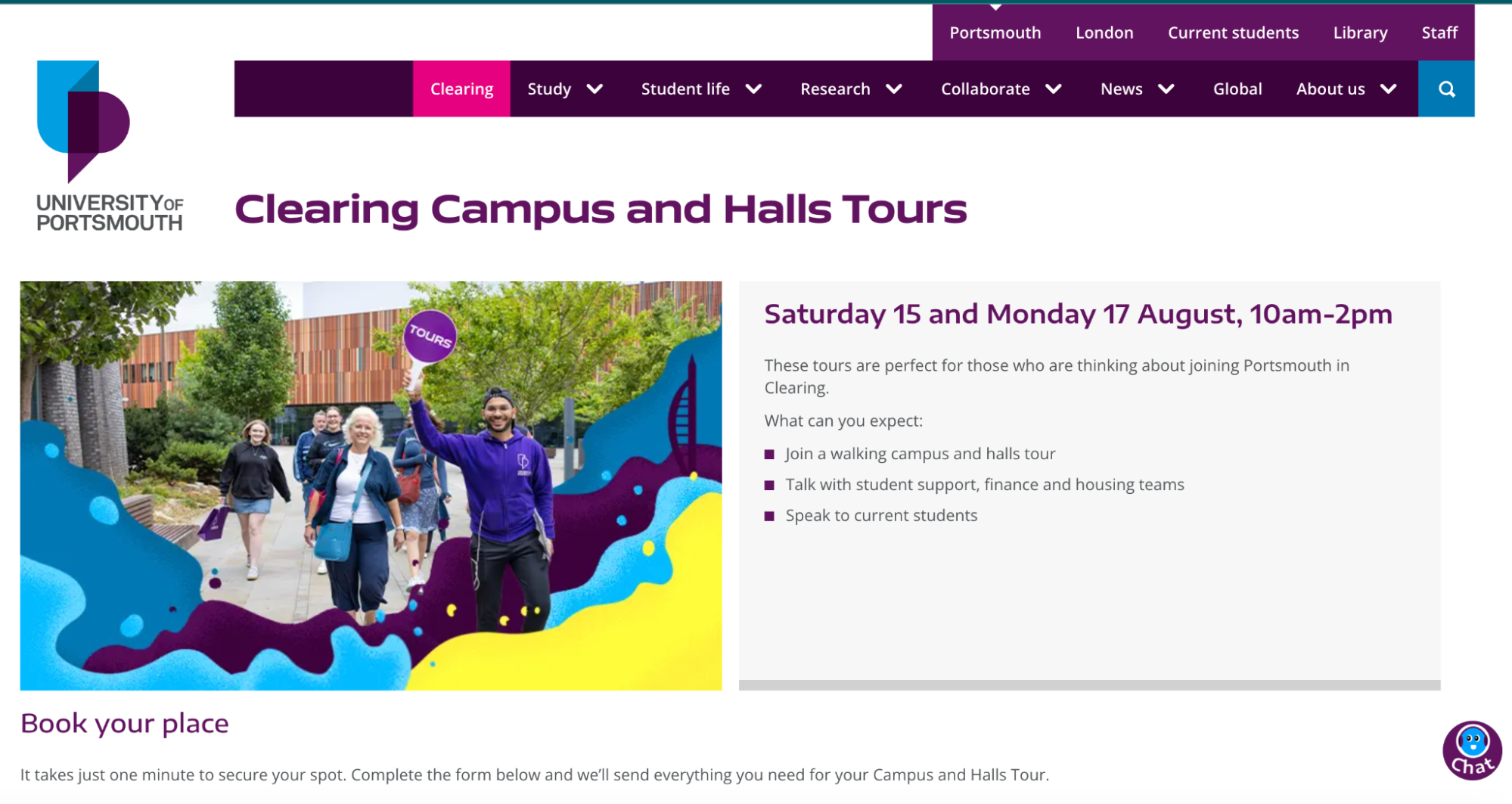
University of Portsmouth followed Results Day with dedicated Clearing Campus and Halls Tours in August.
These went beyond the standard campus walk.
Visitors could tour halls, speak to Student Housing and Student Money teams, talk to current students and see facilities including the library and sports centre.
That's a lot of uncertainty dealt with in one visit.
The University also has dedicated “What to do after Clearing” guidance, covering practical next steps from confirming a place to sorting accommodation, finance and preparing for Welcome Week.
4. University of Derby
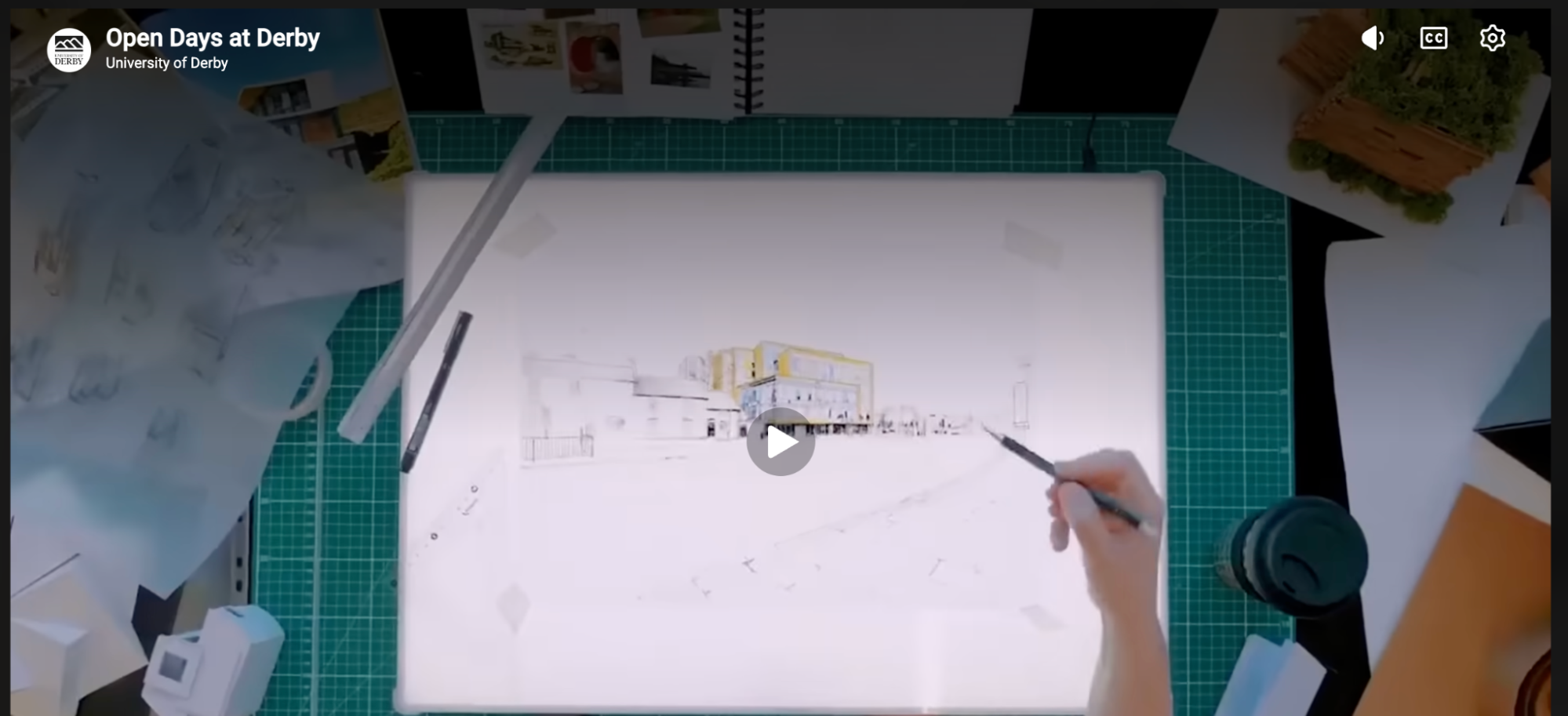
University of Derby kept those opportunities going even longer.
Their Clearing Open Houses ran across Results Day weekend and continued on 21 and 22 August, giving late-stage applicants the chance to see teaching spaces and halls and speak to Admissions, student services, staff and current students.
Results Day can create the spike, but it’s not necessarily when the decision ends (at least, not for the student).
Remove the barriers to visiting
5. University of Gloucestershire
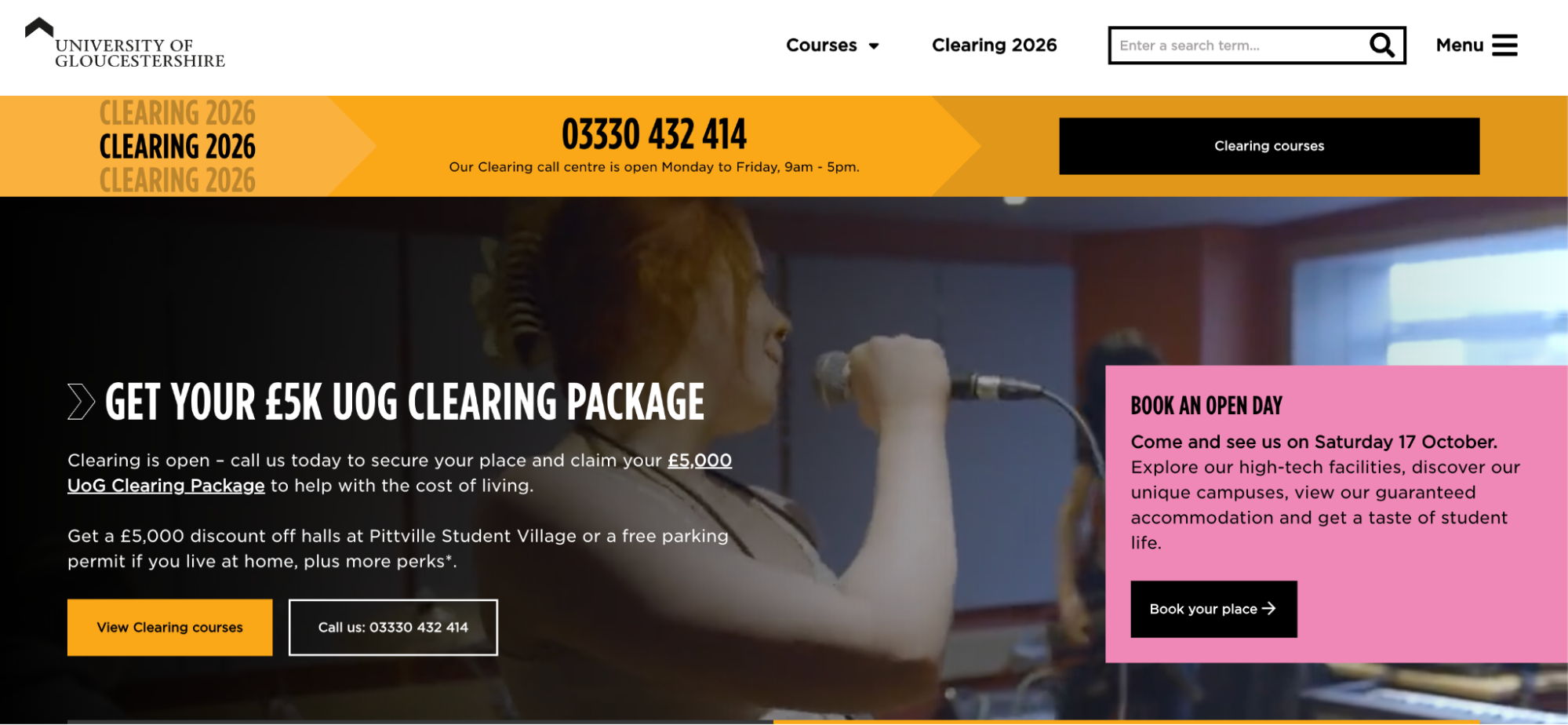
University of Gloucestershire added another useful idea to its post-Results Day visits: help getting there.
Alongside a dedicated Clearing Visit Day and further campus visits, eligible visitors could claim £50 towards travel costs for selected Clearing visits.
It's a fairly simple intervention, but a thoughtful one: telling a student to “come and see us” isn't much help if the cost of getting there is a barrier for them.
The visits themselves were designed around the questions a Clearing student is likely to have: meet academics and support teams, tour campus and accommodation, and even apply and receive an offer on the day.
Again, the marketing and the service start to look very much like the same thing.
Tell a different Clearing story
6. University of Chester
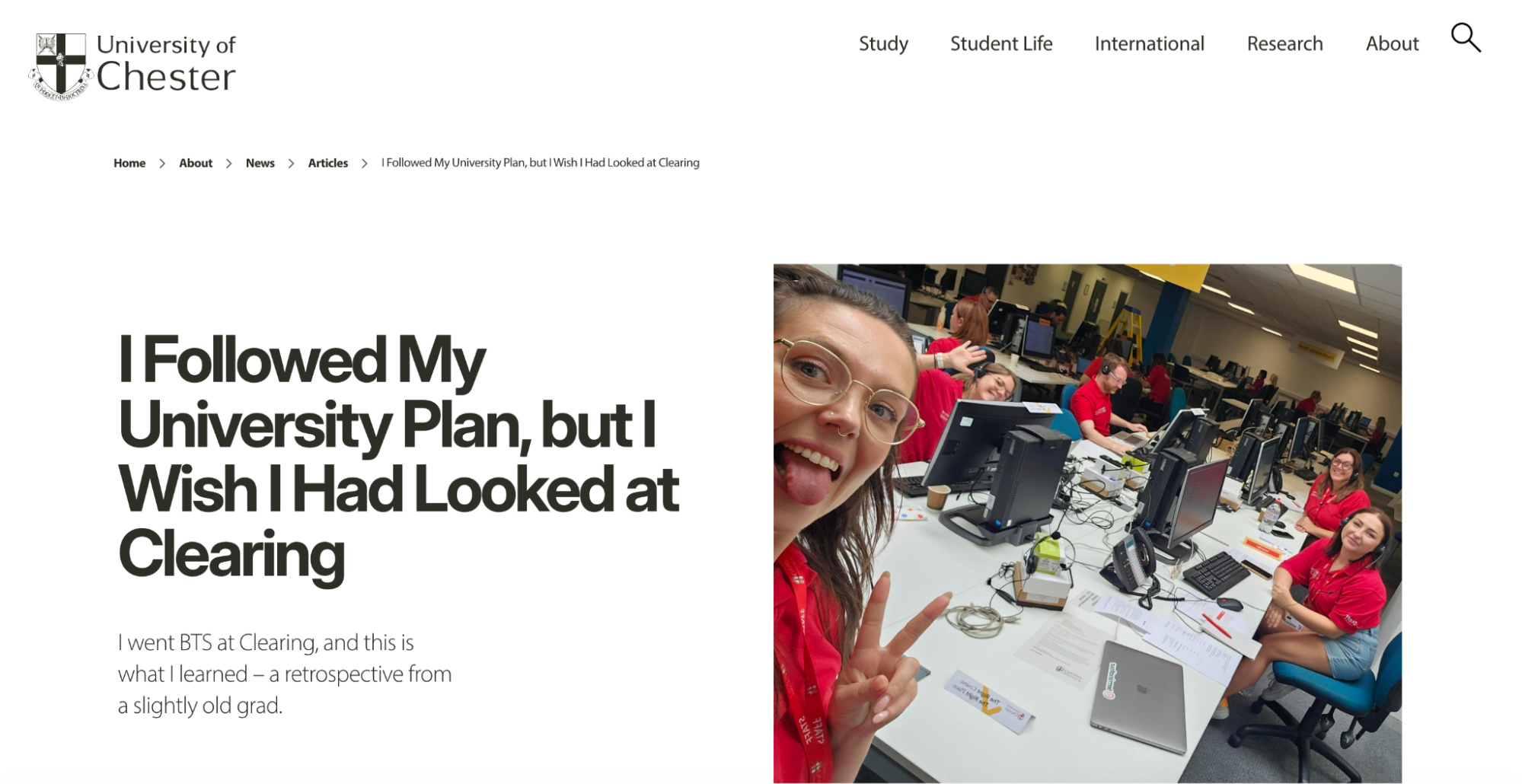
University of Chester published “I Followed My University Plan, but I Wish I Had Looked at Clearing”.
Rather than another guide to the mechanics of Clearing, the article approaches it retrospectively, through a graduate who received better grades than expected but never considered changing the plan she'd already made.
She also goes behind the scenes with Chester's Clearing operation, giving prospective students a look at the people and work behind the process.
It's a way of challenging one of the more persistent ideas about Clearing: that it only becomes relevant when Plan A goes wrong.
Sometimes Plan A is perfectly fine, and it’s great to show students that.
Clearing may simply show them that there was another option worth considering all along. Yours.
Make the link in bio do some work
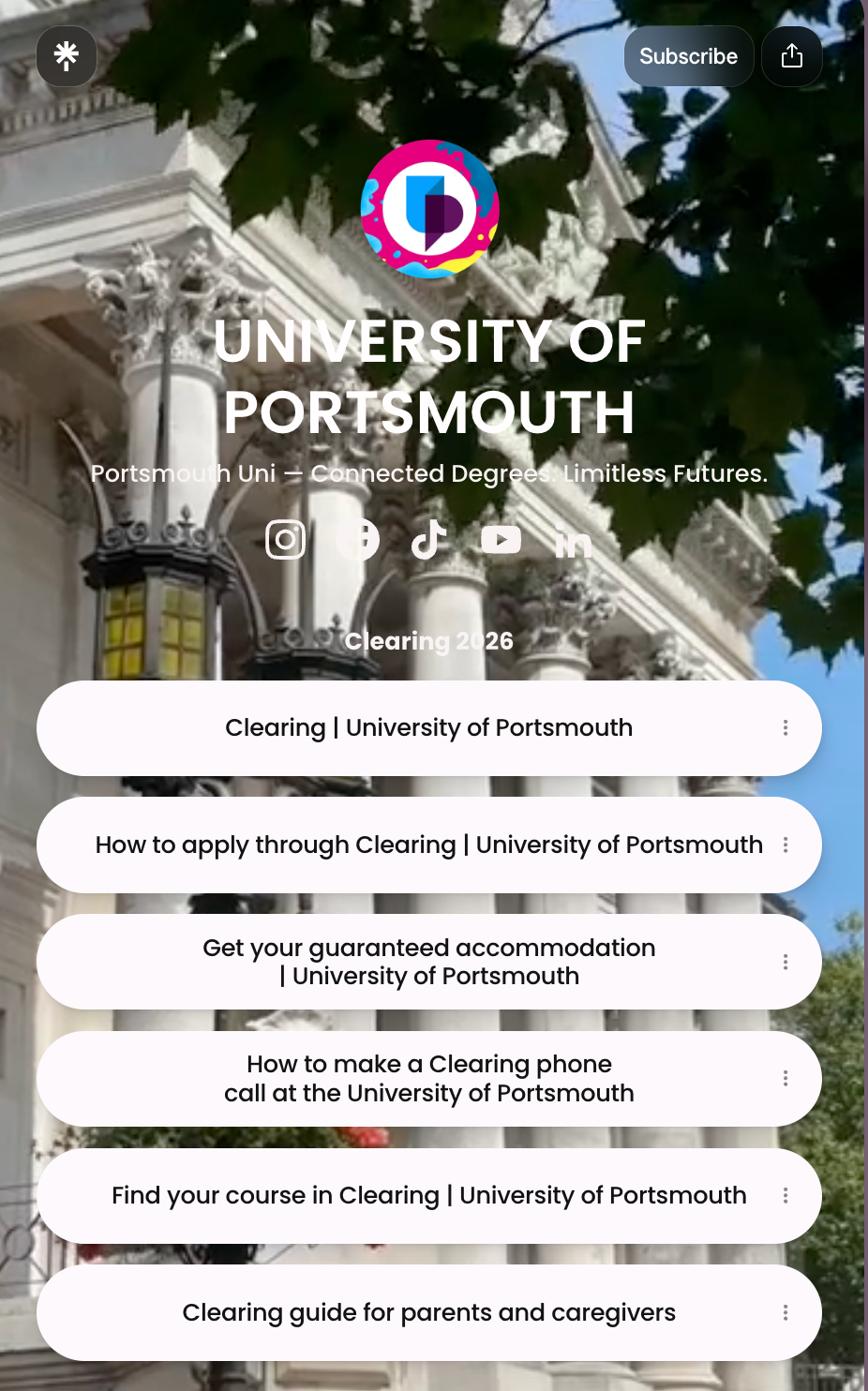
University of Portsmouth also made good use of one of social media’s smallest bits of digital real estate: the link in bio.
Their Clearing 2026 Linktree works almost like a mini Clearing hub, taking students straight to the things they’re most likely to need: available courses, Clearing applications, visit days and webinars, guaranteed accommodation, advice on making a Clearing phone call and even a guide for parents and caregivers.
The social post is often only the start of the journey, so they’re reducing the number of decisions students have to make once they click through, while still giving them several routes depending on what they need next.
The social layer isn’t sitting separately from that experience; it’s acting as a very simple front door into it.
Know when it's time to change the page
And then there's the other end of the Clearing journey: what happens when the vacancies are gone?
7. Newcastle University
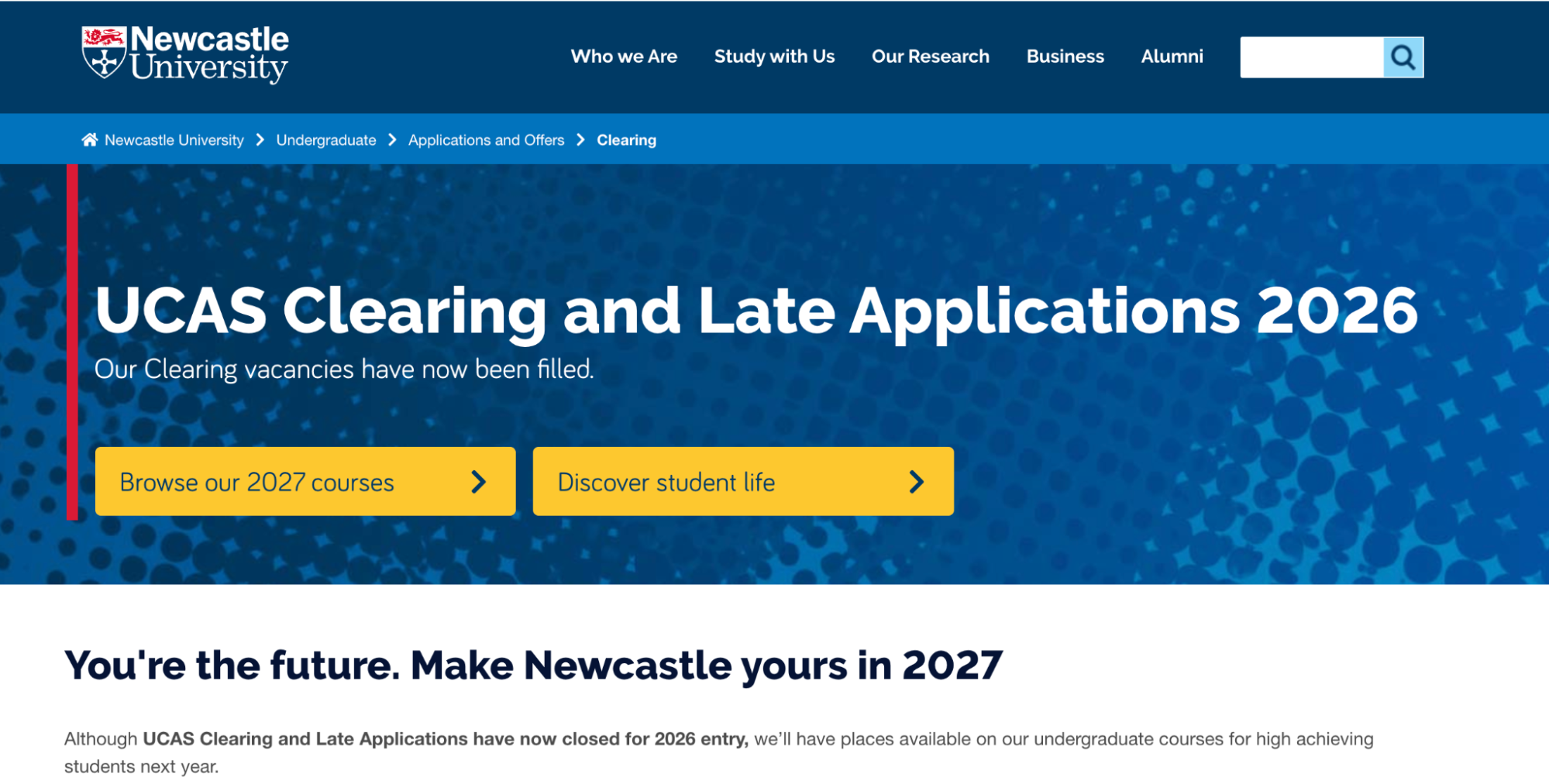
Newcastle University's Clearing page has already moved into that phase. Its 2026 vacancies have been filled, so instead of continuing to behave like an active recruitment page, the content changes direction.
Students joining Newcastle this year are moved towards information about what happens next, while prospective students can start looking ahead to future study.
It's a small but important content-governance point.
A Clearing page shouldn't keep saying “Apply now” when there's nothing left to apply for.
That sounds obvious. But Clearing content can date very quickly, and the usefulness of the page depends on digital teams being able to change messaging, calls to action and journeys just as quickly.
8. Queen Mary University of London
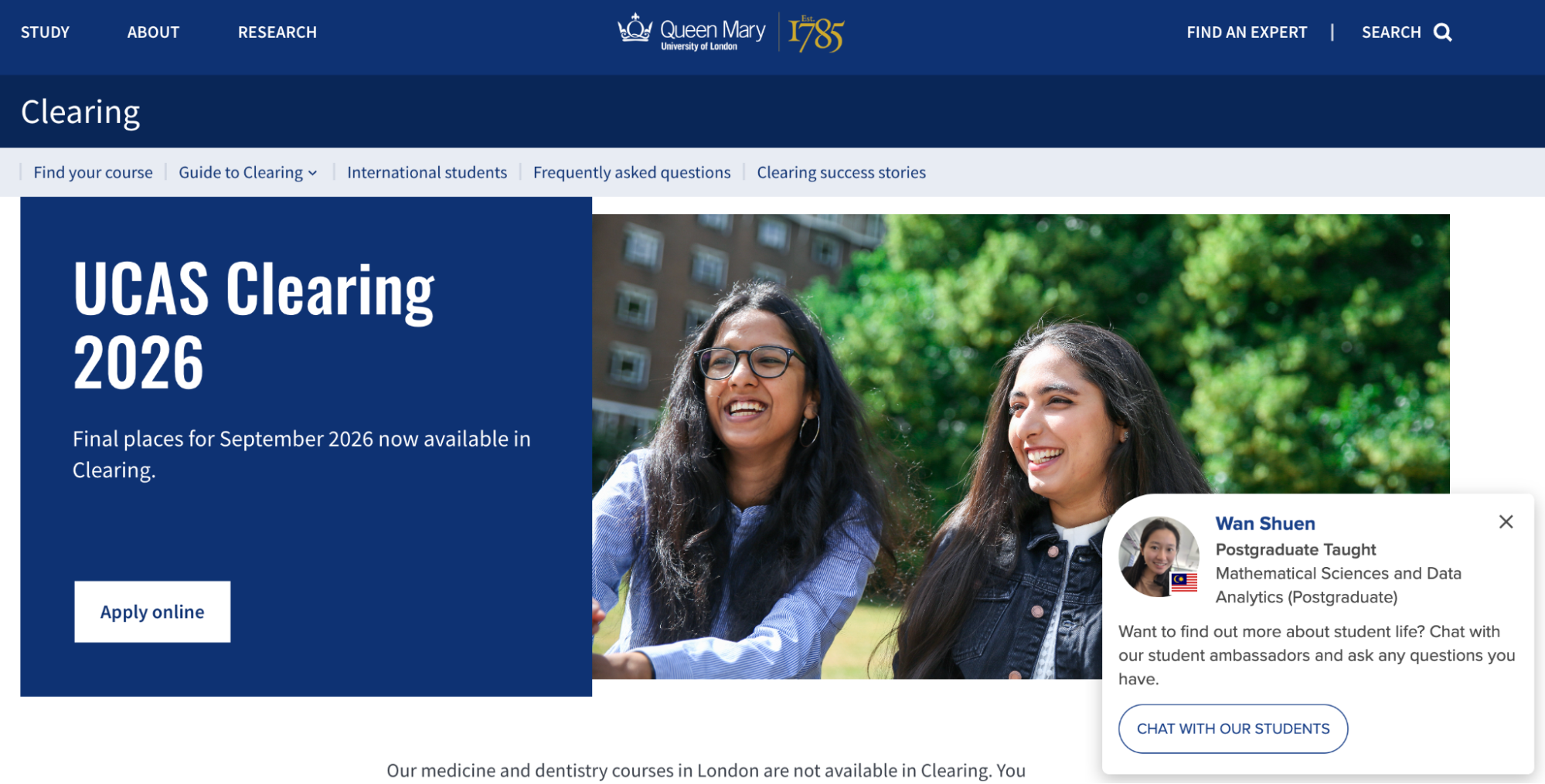
Queen Mary University of London shows another version of that shift.
As Clearing moves into its later stages, the journey changes too, with final available places and online course search becoming more prominent as the intense Results Day phase passes.
The campaign is still running, but the route to conversion changes with it.
The Clearing campaign doesn't really have an end date
Before Results Day, the job was to get onto a student's radar; on Results Day, it was to make applying or speaking to somebody almost impossible to get wrong.
And now, after Results Day, the job changes again: help students work out whether the decision feels right.
That might mean guaranteed accommodation, a dedicated campus visit, help with the train fare. A behind-the-scenes story. Or simply knowing that the time has come to replace your Apply Now CTA with a "here's what happens next" message.
None of those things are like traditional campaign marketing, but that's perhaps the bigger lesson from Clearing 2026, we think.
The strongest digital experiences aren't just promoting available places, they're selling their story and keep changing based on what students need at each stage of the journey.
Same campaign, different moment, different job for your website. Ah, the joys.
Did you do something different for Clearing this year? Share it with us on LinkedIn.