
:format()//media/marketing-wellness-during-exam-season-RQ.png)
Dead week and finals week can turn even the most confident and composed student into a caffeine-fueled, sleep-deprived caricature of their true selves.
And plenty of colleges and universities are doing more than simply wishing students good luck.
From late-night library hours to therapy dogs and drop-in counselling, campuses are finding practical ways to make exam season a little easier.
Here are 10 practical ways you can help your students thrive during the stressful exam season:
1. Extend library and study space hours
During exams, quiet spaces where students can study free from distractions can be hard to find.
Some students are even juggling part-time jobs, commuting, or caring responsibilities and may need to study outside normal opening hours.
You can help by extending the library's operating hours to 24/7 (or near-24/7), opening additional building spaces, and ensuring adequate seating and WiFi for studying.
A few extra hours (and a few extra desks) can make a real difference when campus is at its busiest.
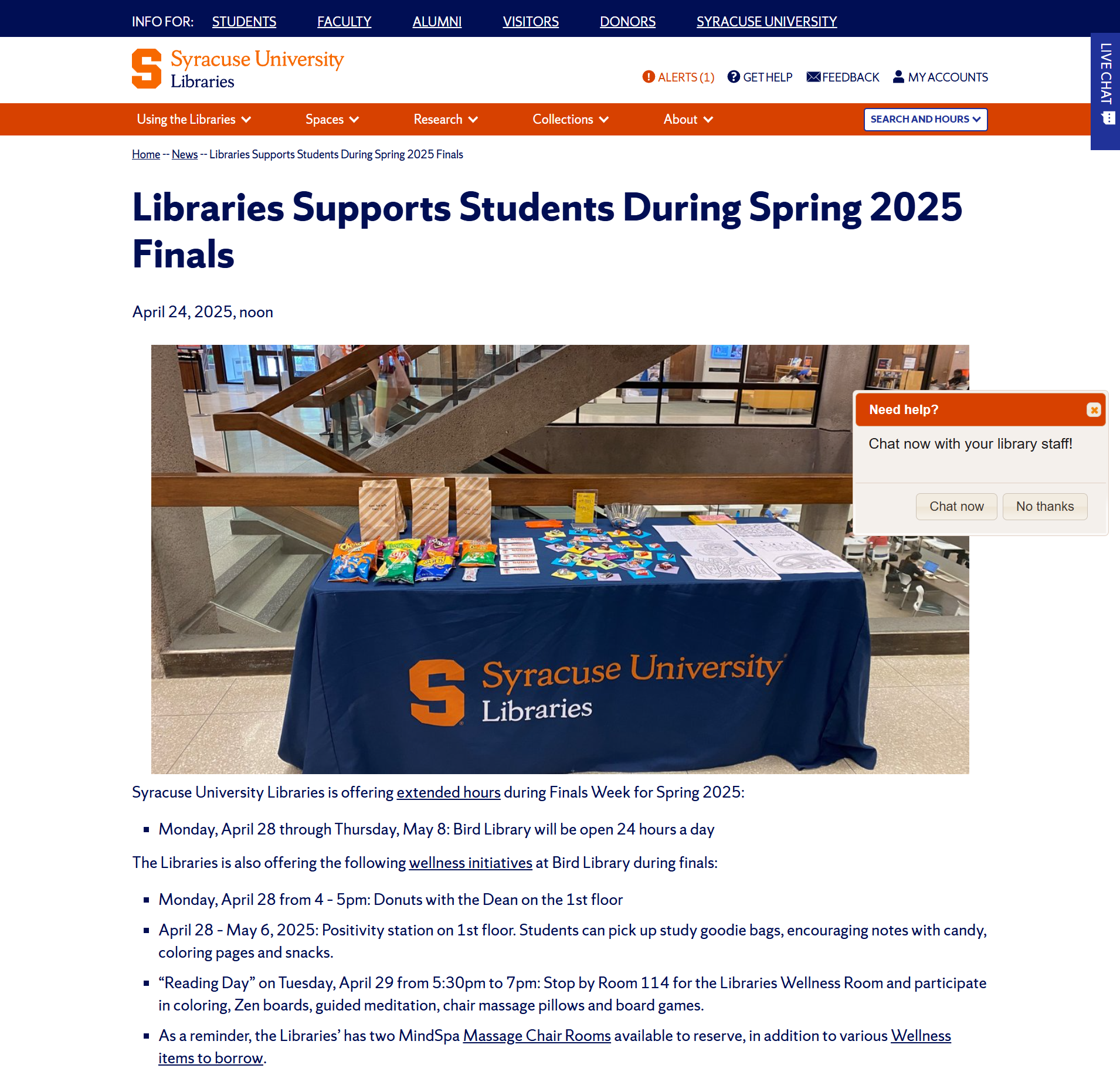
Syracuse University keeps their Bird Library open 24 hours a day during finals season and runs various wellness initiatives, including a "positivity station," goodie bags filled with snacks and encouraging notes, and massage chair rooms.
2. Open counseling drop-in sessions
Anxiety can strike at any time. So, rather than requiring students to book an appointment weeks in advance, set up walk-in mental health support specifically during exam weeks.
These short, no-appointment-needed sessions with counselors help students manage their stress before it overwhelms them.
And make the details difficult to miss: on student portals, digital screens, library signage and the channels students are already checking.
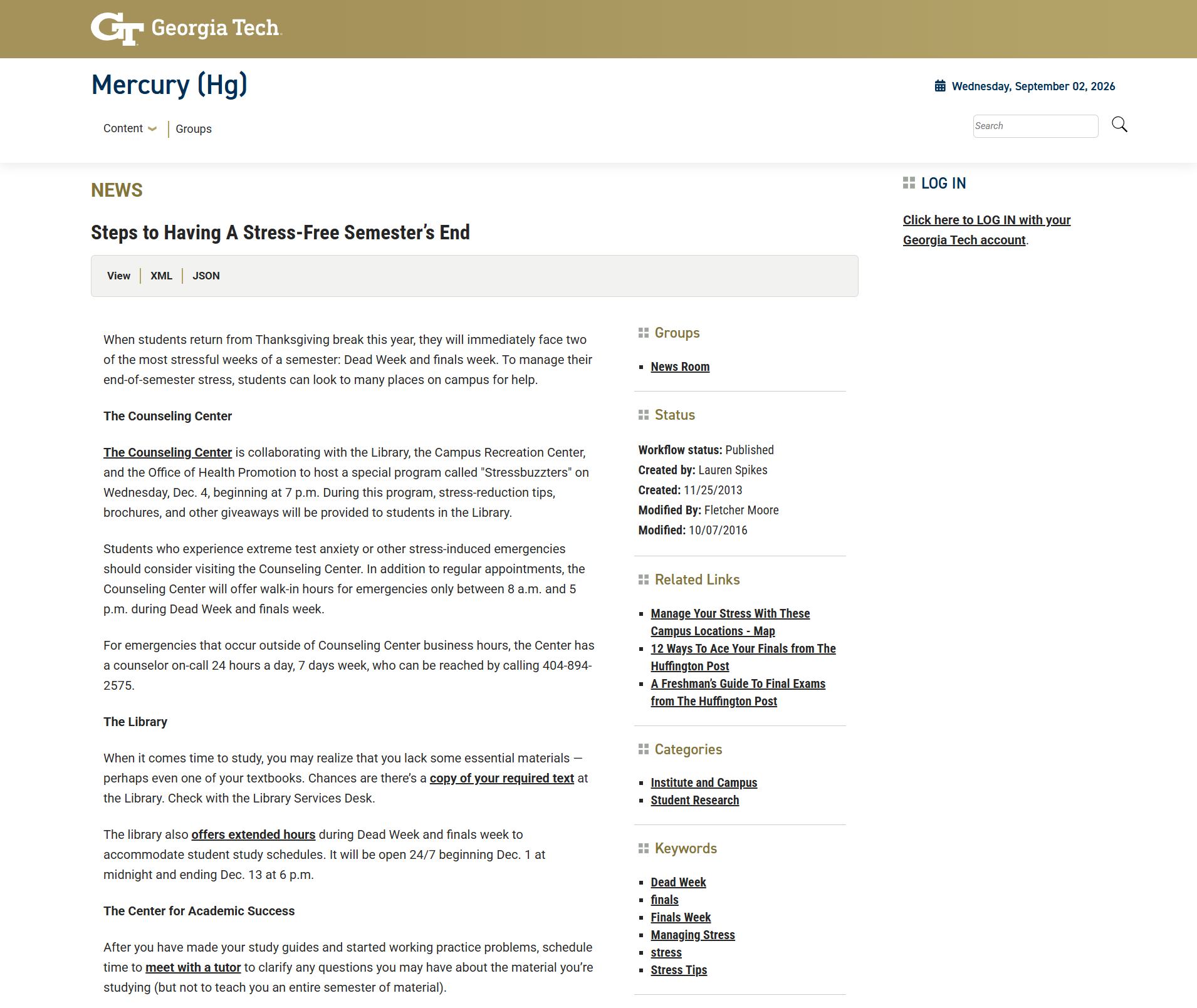
In addition to a 24/7 on-call counselor who can be reached by telephone, Georgia Tech's Counseling Center offers walk-in hours for emergencies during dead week and finals week.
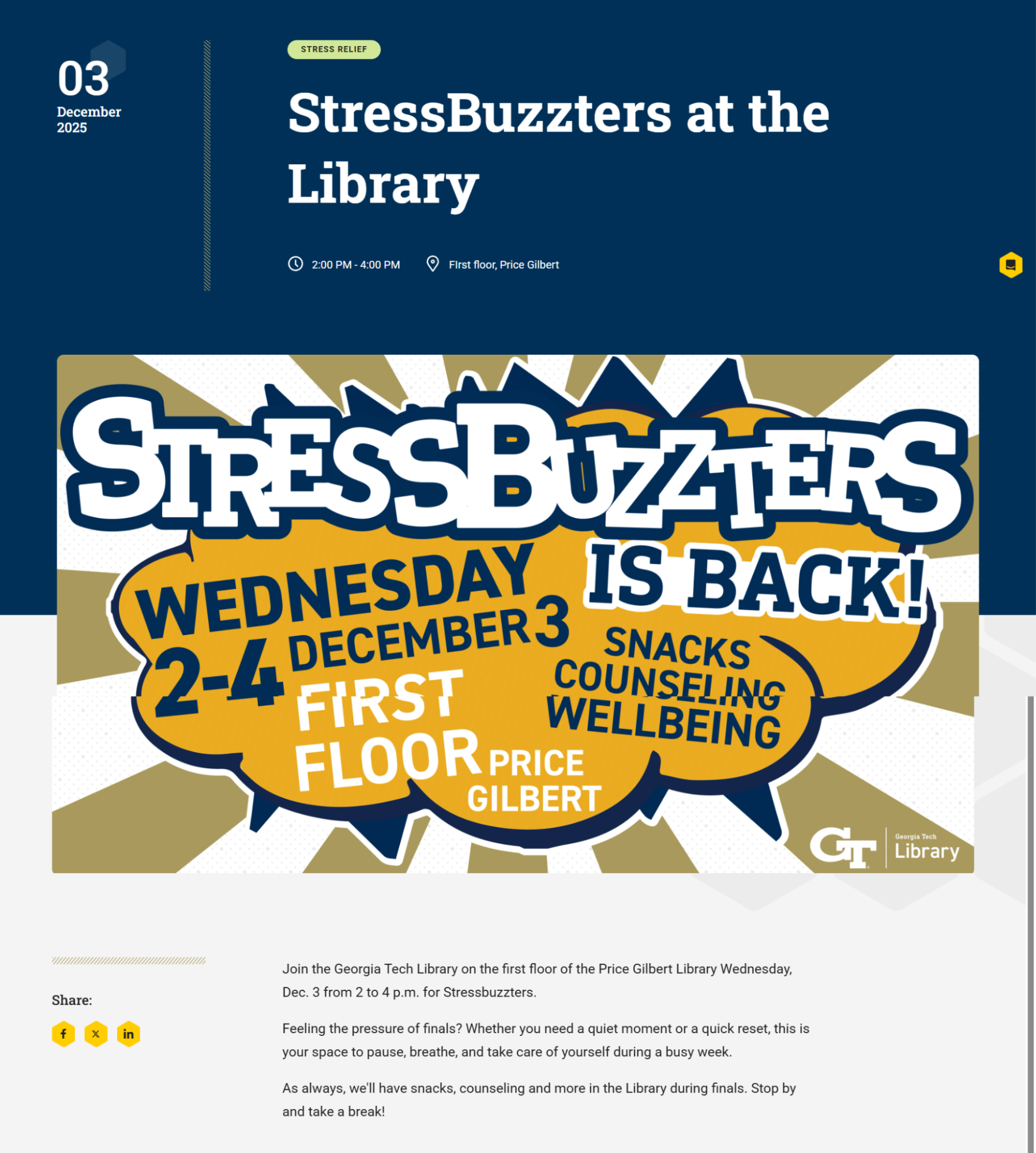
Georgia Tech also hosts a special program called "Stressbuzzters" in the library where students can drop in for counseling, discover stress-reduction tips and information, or simply to pause and reset.
3. Organize free wellness events and activities
Tai chi, yoga, therapy dogs, guided meditations, and relaxation rooms give stressed out students much-deserved breaks from the pressures of studying for finals.
Putting them right where students are studying can also make taking a short break feel like part of exam preparation rather than time away from it.
There's some evidence behind the therapy puppies, too.
A 2023 study of 694 university students found, for instance, found that those who interacted with campus therapy dogs a week before final exams that 92.9% of participants reported feeling less stressed immediately after interacting with the dogs.

University of Connecticut's popular "Paws to Relax" program, a 16-year tradition, brings therapy dogs to campus libraries and buildings to help students de-stress during final exams
4. Provide free healthy snacks and meals
When deadlines pile up, proper meals can quickly fall down the priority list.
Free snacks and late-night food won't fix exam stress, but they can remove one small problem from a very busy day.
Fruit, granola bars, water or simple grab-and-go food are easy additions to libraries and study spaces that will help students have more nutritious snacks.
Some institutions go further by hosting a "breakfast for dinner" event during late-night study sessions to help ensure students are fueled up, able to think clearly, and manage their stress better.
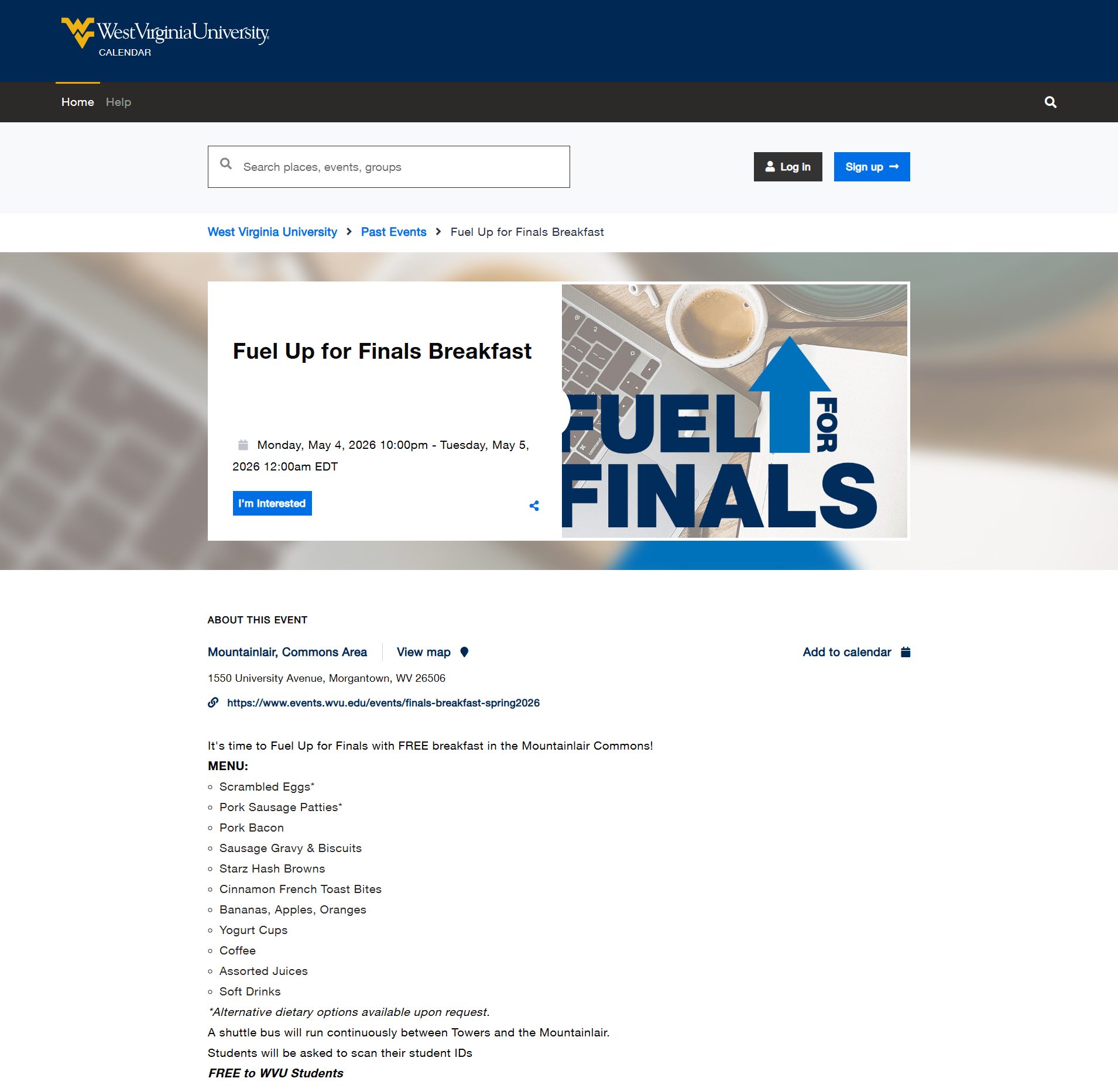
West Virginia University hosts a free-for-students, late-night breakfast tradition called "Fuel Up for Finals" at their Mountainlair Student Union from 10pm to midnight during finals week every semester.
5. Send clear details about exam logistics
Students have enough to worry about during exam time. And uncertainty is a major stress amplifier.
Make those basics clear early: schedules, room locations, permitted materials and any changes students need to know about.
It should also live somewhere obvious and consistent, rather than being scattered across emails, department pages and course systems.
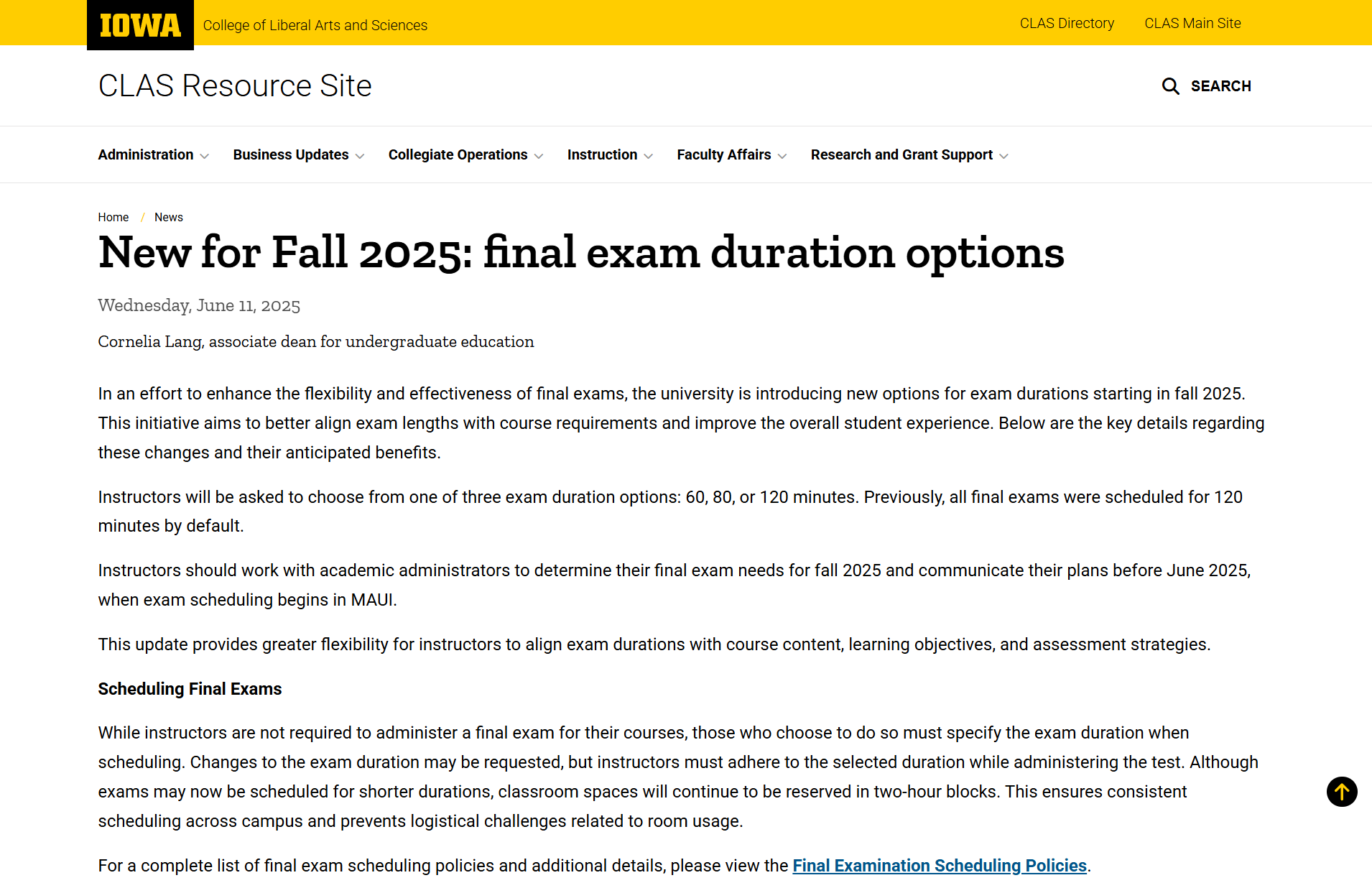
Aiming to reduce logistical confusion for students, University of Iowa restructured final exam duration options (60, 80, or 120 minutes) beginning in the fall of 2025, requiring instructors to communicate plans early via their scheduling system.
6. Offer academic support and tutoring services
Some students get in the studying zone with solitude in a quiet library and their headphones on.
Others need a little more help.
Drop-in help sessions with TAs or instructors, peer-tutoring centers, and subject-specific study groups give students more structured studying options.
Sometimes ten minutes with the right person is enough to unblock an hour of revision.

Indiana University of Pennsylvania offers walk-in tutoring at various campus locations during finals week, along with face-to-face and online writing assistance for papers and presentations.
7. Encourage faculty to be flexible and communicative
Professors should be seen as mentors to students, not obstacles.
They can relieve a ton of exam-related stress by detailing what students will actually be tested on, holding extra office hours, or being reasonably flexible with extensions during dead week and finals week.
Even a short message explaining what to focus on can remove some of the guesswork.
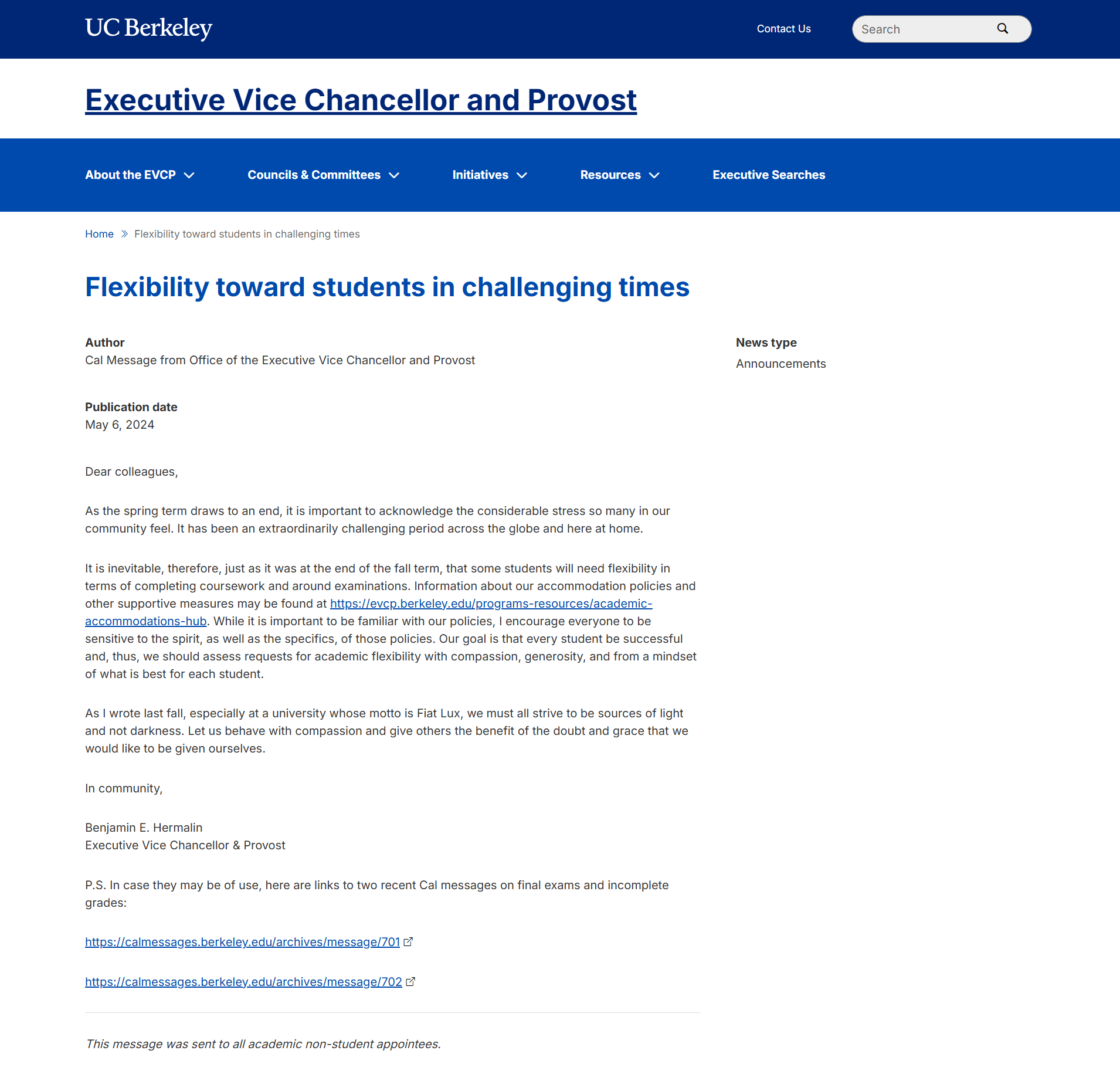
UC Berkeley's leadership sent a heartfelt message to faculty, urging them to show compassion and generosity in granting coursework and exam flexibility at the end of spring term in 2024.
8. Promote sleep and time-management resources
Too little sleep and too much caffeine. It's a recipe most students have mastered—but it's not good for them.
You can run low-friction workshops or share resources on effective studying techniques, time-blocking, and the cognitive costs of sleep deprivation. This is meant to help students study smarter rather than simply longer.
Keep it easy to use, too. During finals, students probably don't need another hour-long session added to the calendar.
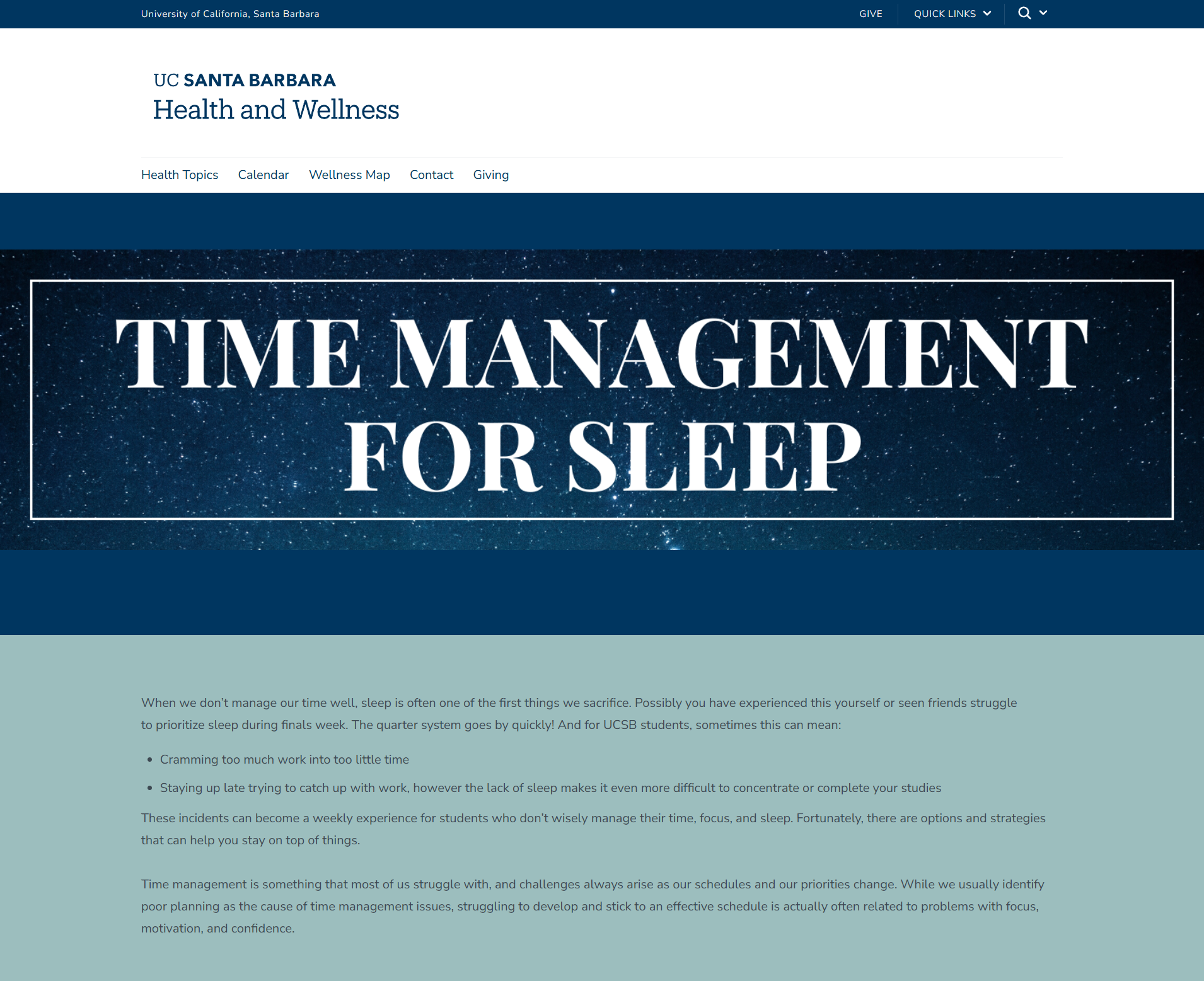
University of California Santa Barbara Health & Wellness runs a dedicated "Sleep Challenge" program that specifically ties time management to sleep during finals week, offering strategies for students who sacrifice sleep for cram sessions.
9. Create quiet, low-stimulation relaxation spaces
Not every break needs an organised activity. A quiet room with softer lighting, comfortable seating and no expectation to study can work just as well.
Even brief 10-15 minute physical and mental breaks can reset focus and reduce all the stress students accumulate while studying for exams.
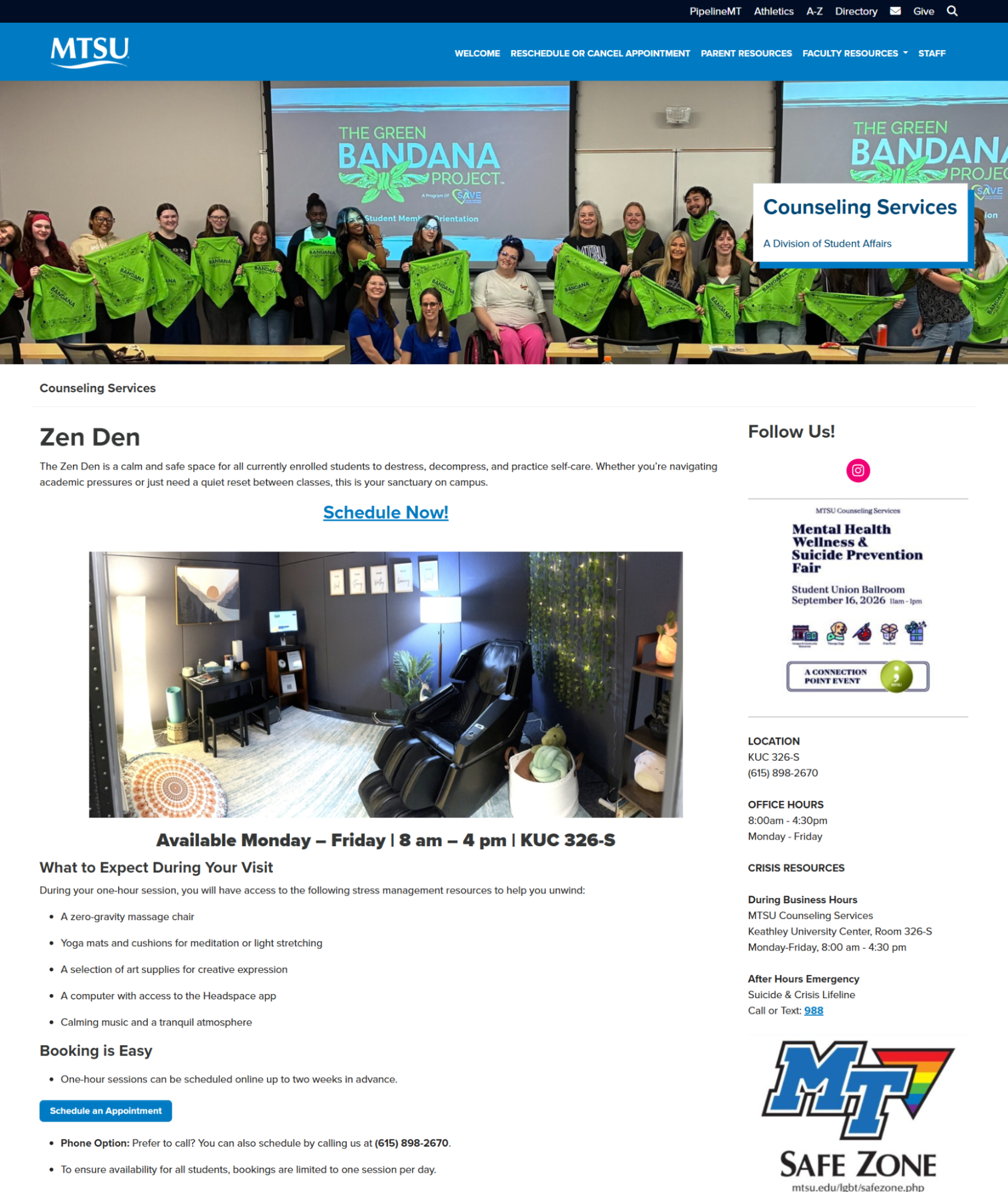
Middle Tennessee State University Counseling Services runs "Zen Den", featuring a massage chair, soft lighting, and a calming atmosphere where students can choose from several calming activities (meditation, coloring, or simply relaxing).
10. Check in on students who show signs of struggling
Faculty, advisors, and resident assistants can be trained to recognize signs of excessive stress or the early stages of burnout.
A simple check-in can sometimes surface an issue before a student actively asks for help.
Low-pressure, judgement-free check-ins can help students before an isolated stressful incident escalates into a full-blown crisis with lasting implications.
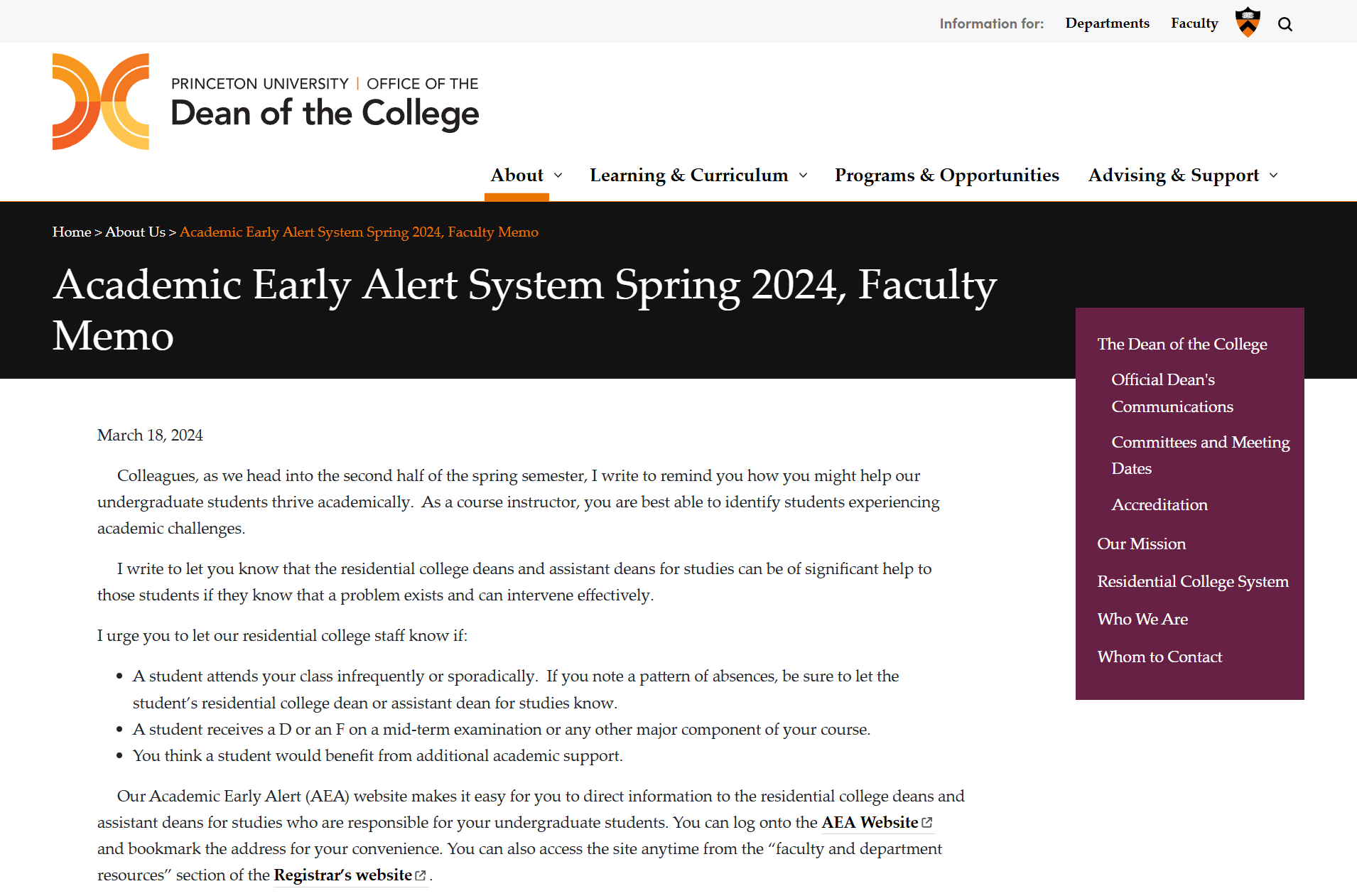
Princeton University leadership issued a memo encouraging faculty members to use the school's Academic Early Alert (AEA) website to flag their concerns about students who may be struggling and require follow-up.
Small gestures with huge impact
Exam stress isn't going anywhere, and no university can remove it completely. But there's plenty you can do to make those few weeks easier to navigate.
The most effective and empathetic schools are combining immediate relief (walk-in counseling, quiet rooms, free meals) with long-term structural changes (adjusted academic calendars, faculty behavior and policies, proactive support).
Health and academic success are not mutually exclusive. As student wellness continues to be a defining priority, especially among parents of students, institutional support can make a positive difference in the overall health of students during the most high-pressure weeks of the academic year.
What does your college or university do to help students survive and thrive during dead week and finals week? Share your stories with us on LinkedIn.