
:format()//media/Personalized-AI-videos-for-higher-educatoin-RQ.png)
Personalization gets talked about a lot in higher education marketing.
Usually, it means email journeys, segmented campaigns, or dynamic content.
Useful, yes. But also familiar.
Video is where things start to feel more human again (and isn't it just in time!).
And with AI now genuinely useful in the production process, it's worth taking seriously as something more than a nice-to-have for well-resourced teams.
Why personalized video is important now for higher ed
This isn’t really about shiny new tech, but about ever-elusive attention.
Prospective students aren't just looking for information.
They're looking for signals, whether they can see themselves at your university, whether the experience feels right, whether you understand what they care about.
Students expect communication that reflects their interests, behaviors, and stage in the journey.
(A quick guide on marketing automation for higher education makes that case clearly.)
And video has always had an edge over static content, because it can carry information and feeling at the same time.
A welcome video for applicants interested in engineering lands differently when it references the subject area, shows the right facilities, and features a student or faculty voice they can relate to.
A follow-up video after an open day feels more useful when it connects back to what that student already explored. A scholarship explainer becomes more watchable when it is short, direct, and clearly meant for one audience instead of everyone at once.
That’s the real promise here: not mass personalization for its own sake but… relevance.
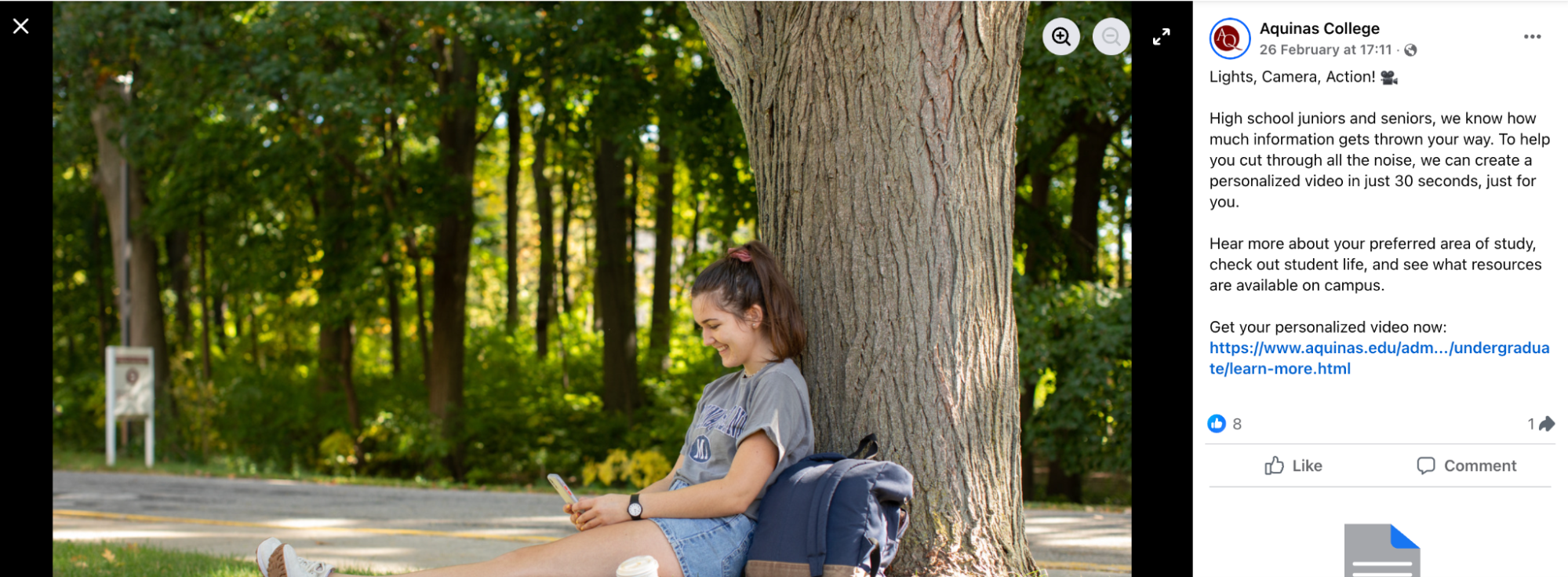
Aquinas College - Grand Rapids on Facebook lets prospective students know that they’ll receive their own personalized video - in less than 30 seconds!
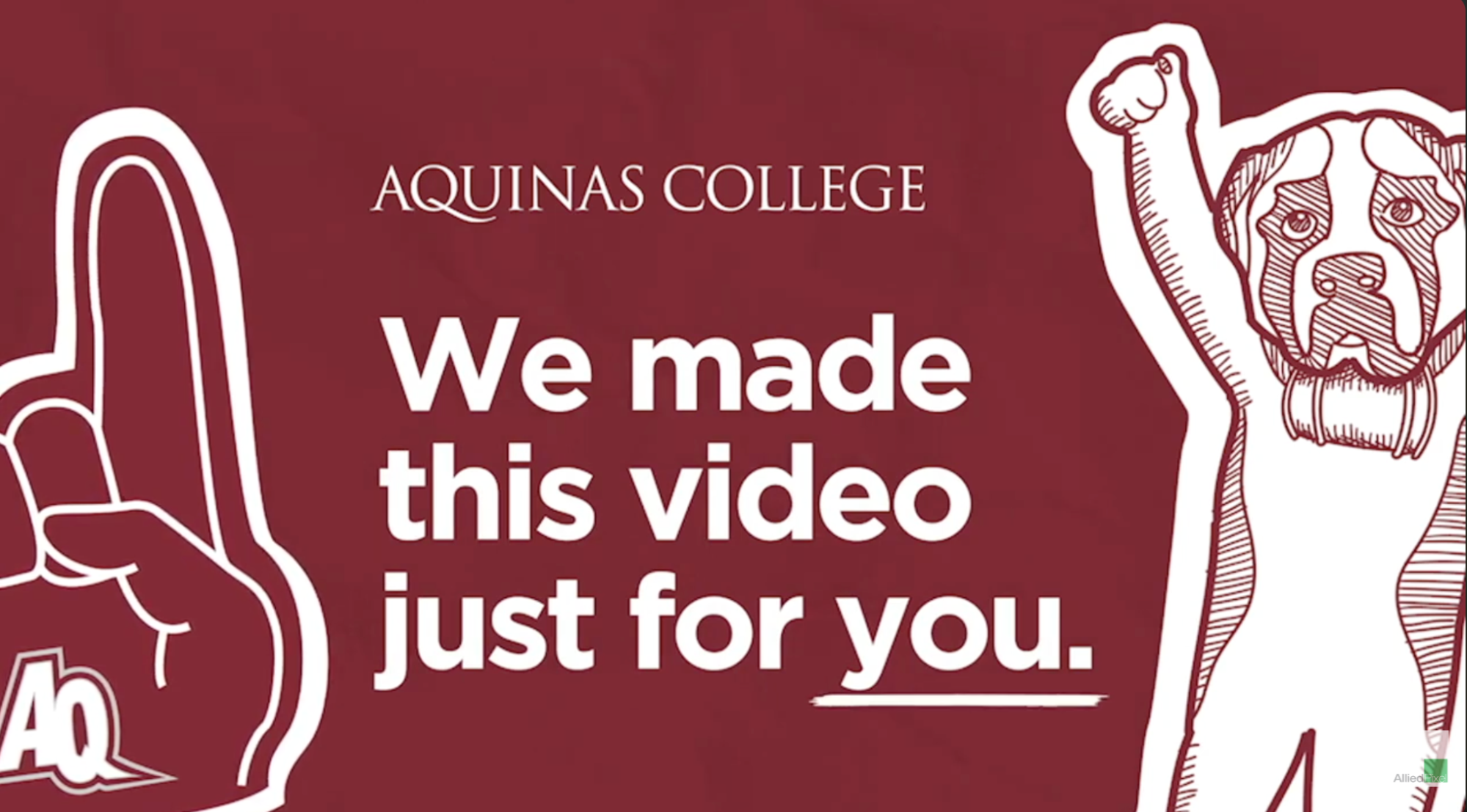 Check out Aquinas College's personalized welcome video
And as we noted in 10 marketing trends for higher education you can't ignore, personalization and AI have moved from side conversations into the centre of the work.
AI can help you produce, adapt, and scale video content in ways that were harder to manage even a year ago.
Where AI actually helps
This is the part worth being practical about, because AI's real value in video production isn't what most people assume.
It doesn't replace filming, storytelling, or the student faces that make higher ed video credible.
What it does well instead is everything around that:
- Identifying content themes from search data and inquiry trends
- Scripting first drafts for different audience segments
- Generating captions, transcripts, and cutdowns from longer footage
- Suggesting titles, thumbnails, and platform variations
- Repurposing one longer video into multiple shorter clips for email, social, and nurture journeys
Our Summer 2024 social media roundup highlighted how tools like Gemini were already being used to brainstorm video ideas, titles, and thumbnails.
And in 10 tools for home-grown higher education videos and podcasts, we looked at AI-assisted transcription and captioning tools that make video more accessible and more manageable for smaller teams.
Think of AI as production support. It helps your team move faster, repurpose smarter, and spot patterns earlier.
It doesn't replace the things that make higher ed video work in the first place.
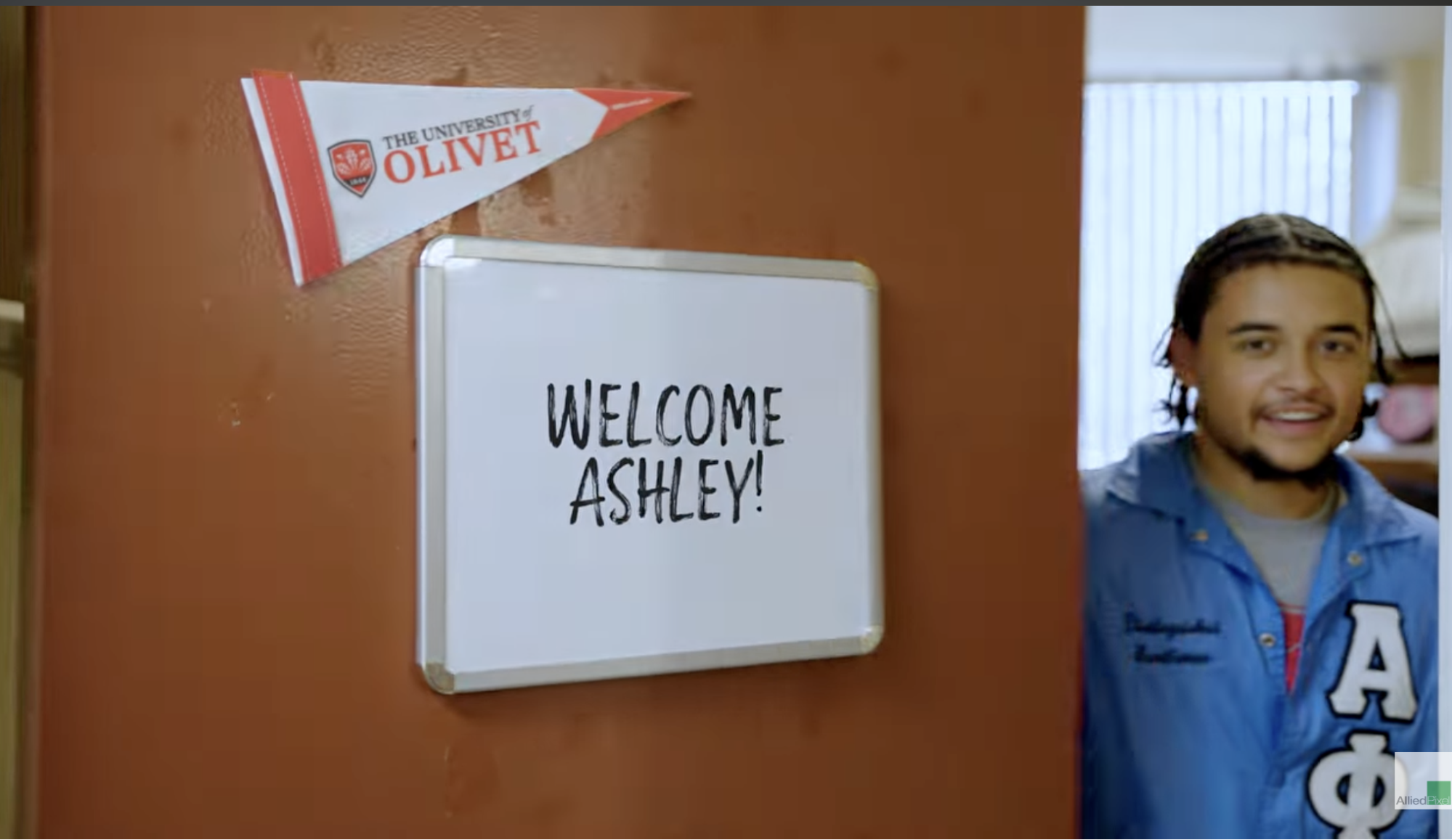
Who doesn’t love a personalized video? The University of Olivet shares their admit hype video on YouTube. AI can get you there faster.
Keep the human part human
This is where a lot of video strategy falls apart.
Students are really good at spotting content that feels “assembled” from marketing leftovers.
As we noted in Mastering YouTube Shorts: how to engage Gen Z and boost recruitment, less scripted content often lands better - and that's even more true when AI is involved in the process.
A simple rule of thumb: let AI handle the repetition, and let people handle the meaning.
Your best personalized videos will still feature student ambassadors, academics, and alumni answering real questions in their own words.
They'll still feel rooted in the actual experience of your campus.
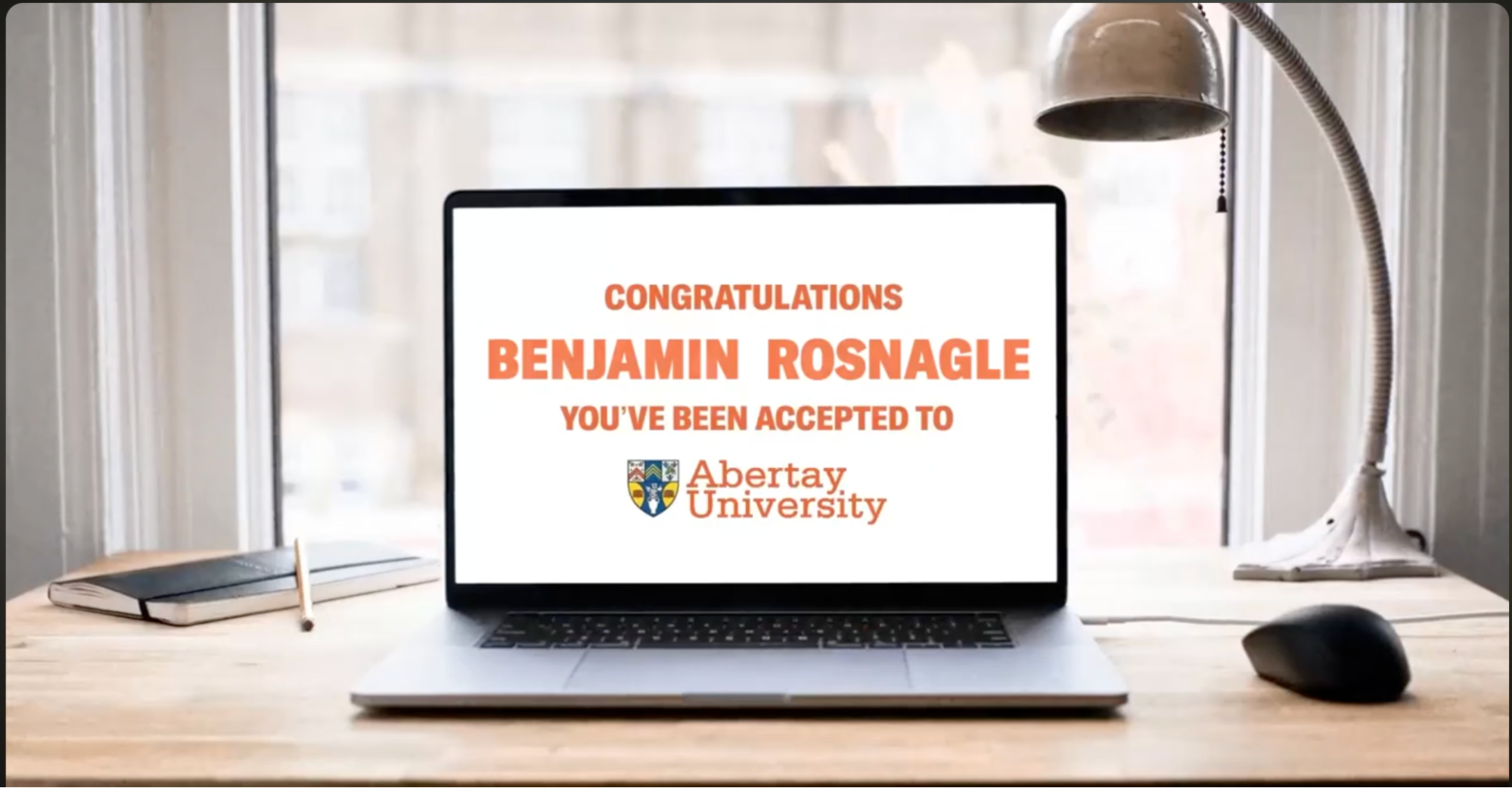
Abertay University welcomes students with their own personalized video
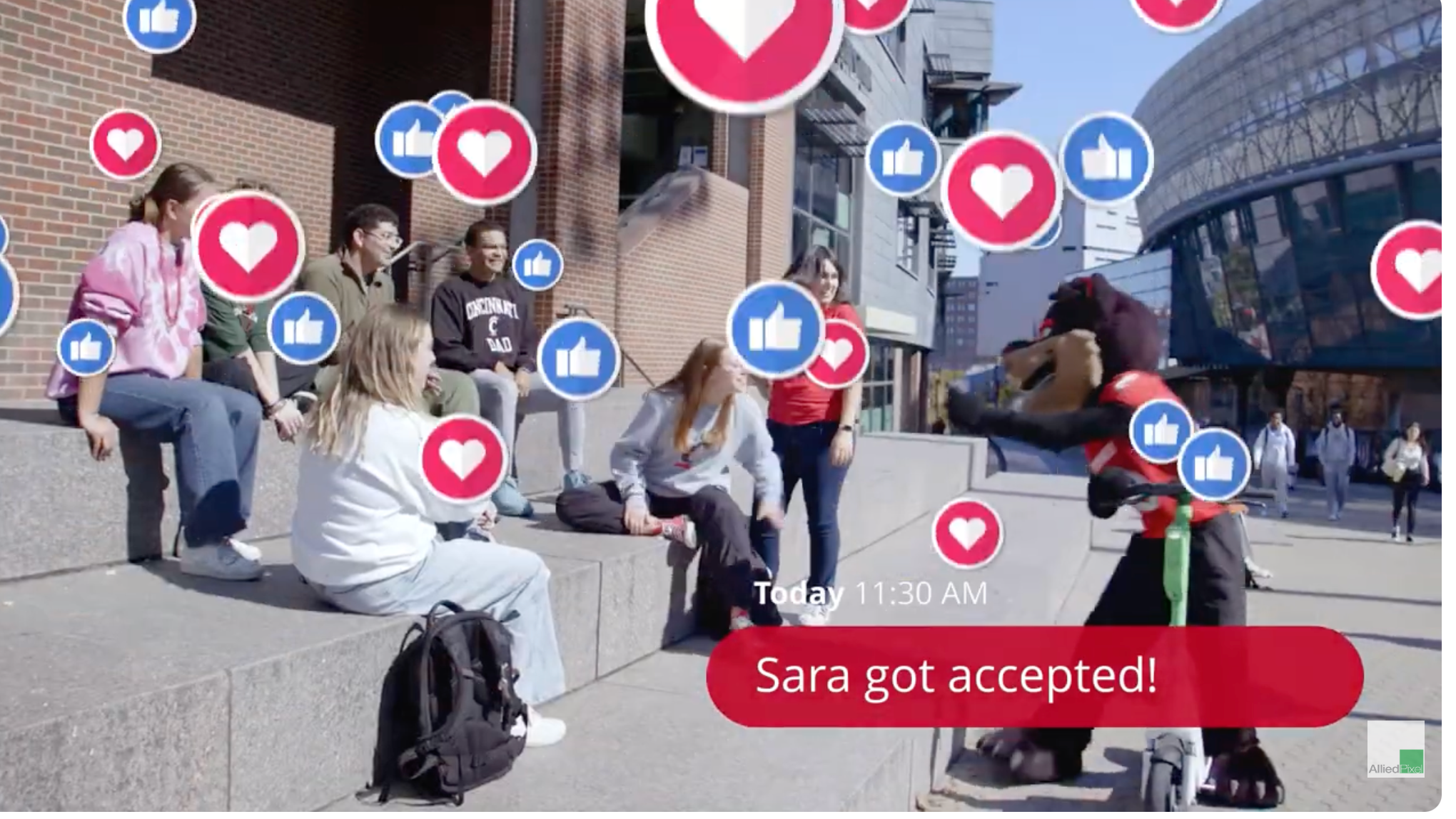 Sarah got accepted! University of Cincinnati also created their own personalized admit hype video
What AI gives you is more time and capacity to make those videos, not a replacement for them.
That ties directly to what Five strategies to win over and recruit Gen Z students gets at: storytelling through real student experiences consistently outperforms polished brand content.
Four ways to use personalized video without overcomplicating it
If your team is curious but stretched, these are the four approaches that tend to work best in practice.
- Personalize by audience, not by individual: Build versions for international students, postgraduate prospects, accepted applicants, or parents. It's manageable to produce and still feels relevant to the person watching.
- Personalize by stage: A student who just downloaded a prospectus needs a different video from someone who's already attended an open day. Use AI and automation to support sequencing, not just content creation (a principle covered well in our guide to marketing automation for higher education.)
- Start short: A 20-second subject-specific clip, a quick "what happens next" video, or a student answering a common admissions question is often enough. You don't need a campaign to test the approach.
- Build once and adapt well: One campus visit video can become multiple shorter clips for email, landing pages, social, and nurture journeys. That's where AI earns its keep most clearly — not in creating from scratch, but in making existing content work harder.
A few things to keep in check as you scale
- Don't personalize using data that would feel intrusive - keep targeting helpful, not unsettling.
- Make captions and transcripts part of the workflow from the start, not an afterthought.
- Review AI-assisted outputs carefully for tone, accuracy, and bias before they go out.
- And keep brand governance close, especially if multiple faculties or departments are producing video independently.
The teams that perform best align around shared goals and shared standards. personalized video is no different.
The bigger picture
Personalized video with AI is a content operations opportunity, not a trend. It’s a way to be more relevant without building everything from scratch every time.
Done well, it gives prospective students something they're not getting enough of elsewhere: content that feels like it was made with them in mind.
That's a better goal than novelty, and it's something higher ed team can actually achieve.
How is your university or college using video to make student communications feel more personal? We'd love to hear what's working; share it with us on LinkedIn.